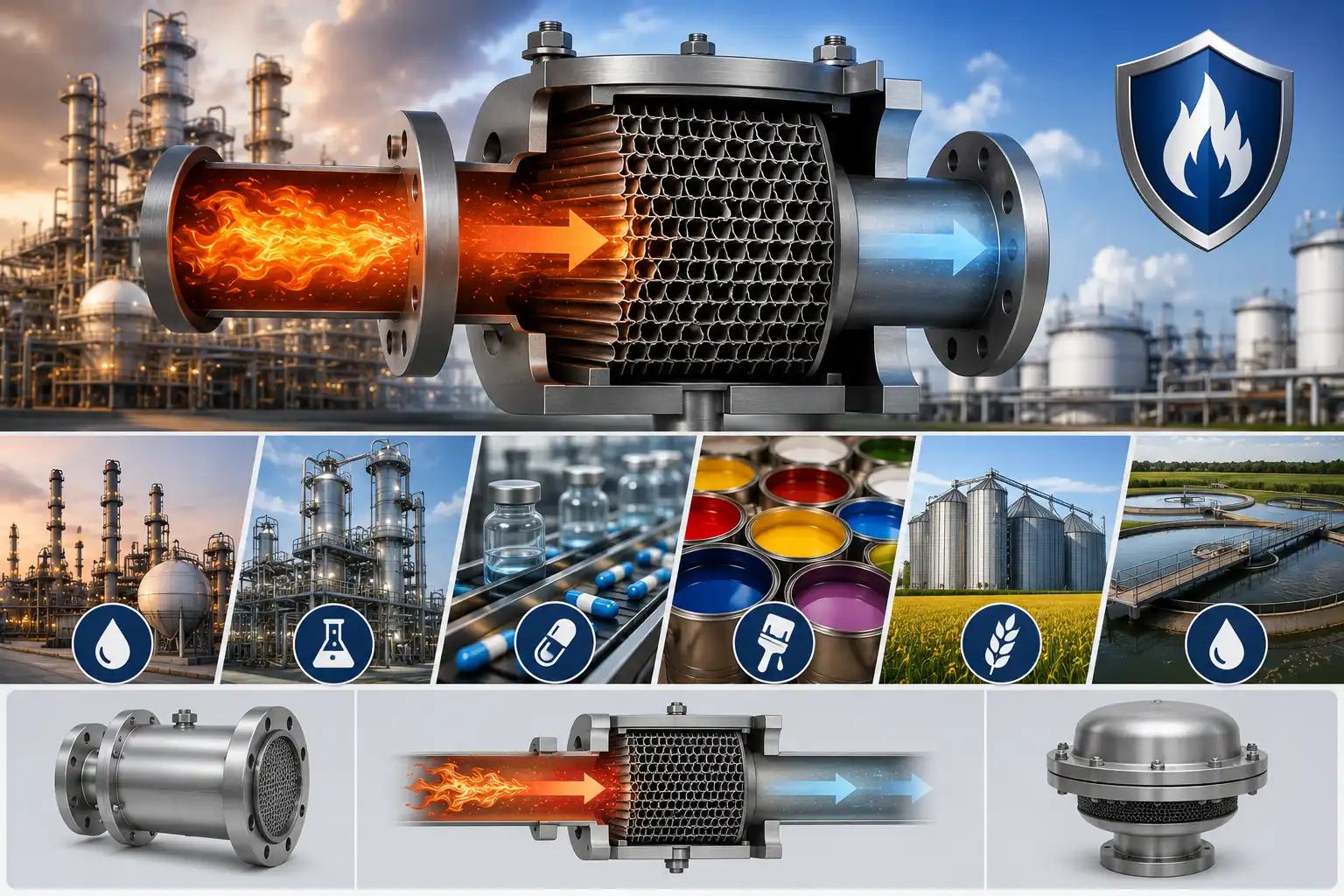
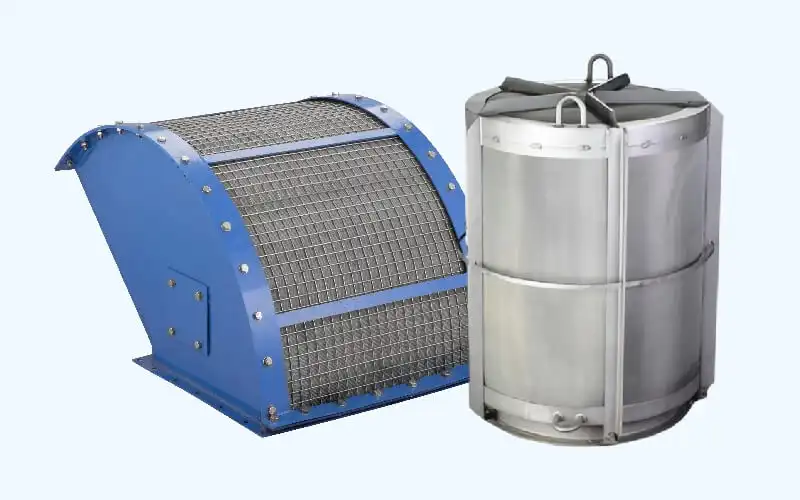
A flame arrester — also written as flame arrestor, deflagration
arrester, or
flame trap
— is a passive safety device that allows free passage of gas or vapor while physically
preventing flame
propagation through a pipeline or vent opening. It works by quenching the flame
front
across a high-surface-area matrix of narrow passages, extracting heat faster than
combustion can
sustain
itself. No power supply. No moving parts. No operator intervention required.
Despite being one of the most reliable and cost-effective components in any
explosion
protection
system, flame arresters are regularly underspecified, incorrectly selected,
or
entirely
omitted — especially in fast-growing process industries where safety infrastructure
hasn't kept
pace
with production scale. The result is uncontrolled flame propagation,
flashback into vessels, and in the worst cases, a
deflagration-to-detonation
transition (DDT) that turns a contained incident into a facility-wide
catastrophe.
This guide covers the top industries where flame arresters are operationally critical,
explains
the
relevant hazard mechanisms, and identifies the applicable standards and product types
for each
scenario.
$800M
projected global flame arrester market by 2033 at 6% CAGR
DDT
deflagration-to-detonation transition — the critical failure mode flame
arresters prevent
EN ISO 16852
international standard for flame arrester type testing & certification
2 Types
in-line & end-of-line — each designed for distinct hazard scenarios
What makes a flame arrester necessary?
The three conditions that create a flame propagation hazard are: a flammable gas or vapor
within
its
flammable limits (LEL to UEL), a source of ignition (spark, hot
surface, static
discharge, lightning), and a confined pathway such as a pipeline or tank vent. When all
three
exist
simultaneously, a flame front can travel at subsonic speeds
(deflagration) or,
given
sufficient pipe length and turbulence, accelerate through a DDT process to supersonic
speeds
(detonation).
The Maximum Experimental Safe Gap (MESG) and Minimum Igniting
Current
(MIC) of the specific gas determine which gas group (IIA,
IIB,
IIC) the
hazardous atmosphere belongs to — and therefore which flame arrester element design is
required.
A
device rated for Group IIA gases (e.g. propane) will not reliably arrest a Group IIB
(ethylene)
or Group
IIC (hydrogen) flame front. Correct gas group classification is the foundation of proper
flame
arrester
selection.
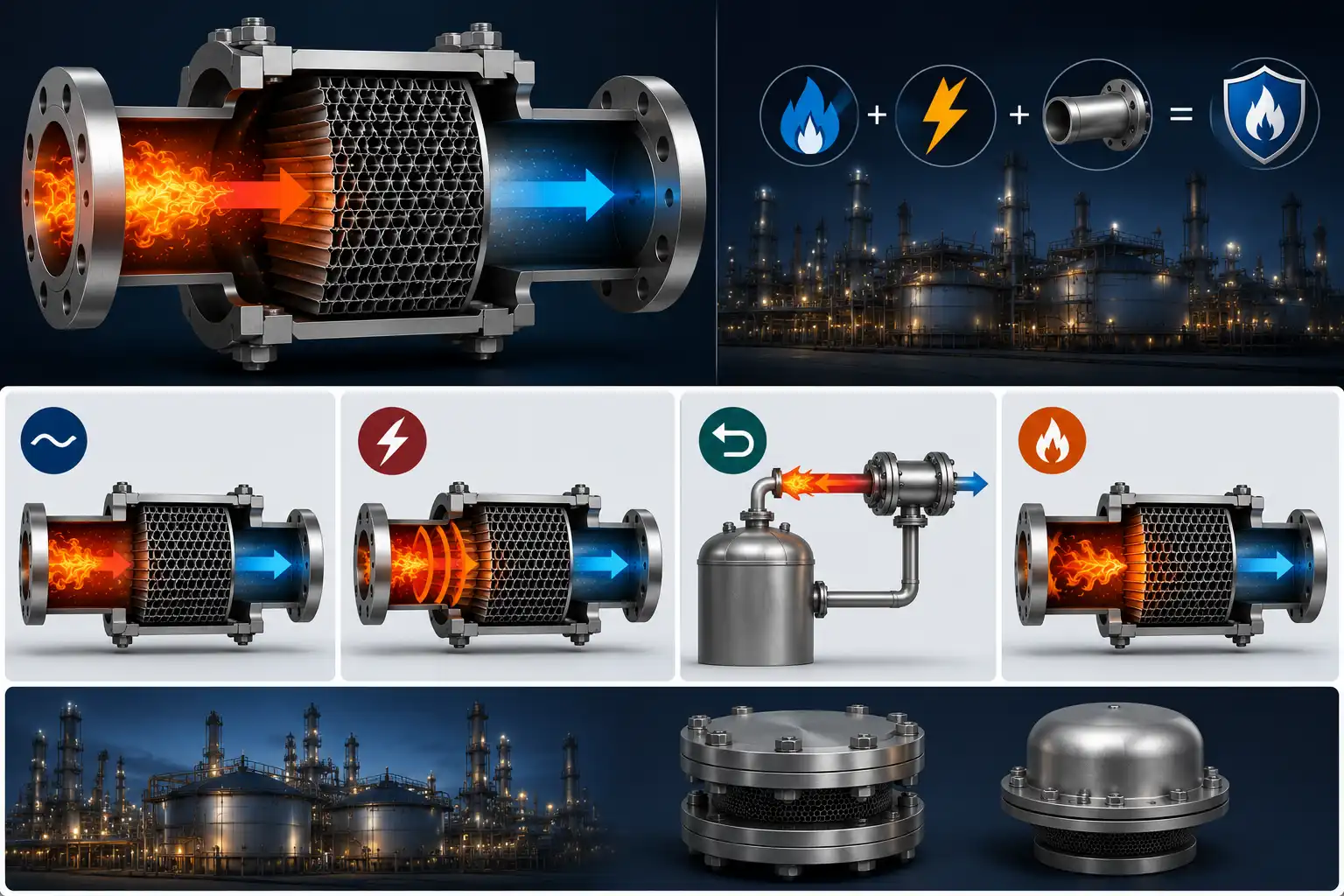
〰️
Deflagration
Subsonic flame propagation. Pressure rise 8–10× initial. Arrested by
standard
deflagration-rated elements.
⚡
Detonation
Supersonic flame front with shock wave. Requires detonation-rated
arresters with
robust housings.
↩️
Flashback
Flame travels back into vessel through vent lines. End-of-line arresters
prevent
this critical failure mode.
🔥
Stable burning
Sustained flame at the arrester face. Thermally stable units with heat
dissipation capability are required.
"A flame arrester doesn't prevent an explosion from starting. It prevents it from spreading —
which is
the difference between a controlled incident and a facility-wide disaster."
Industry breakdown — 7 sectors at risk
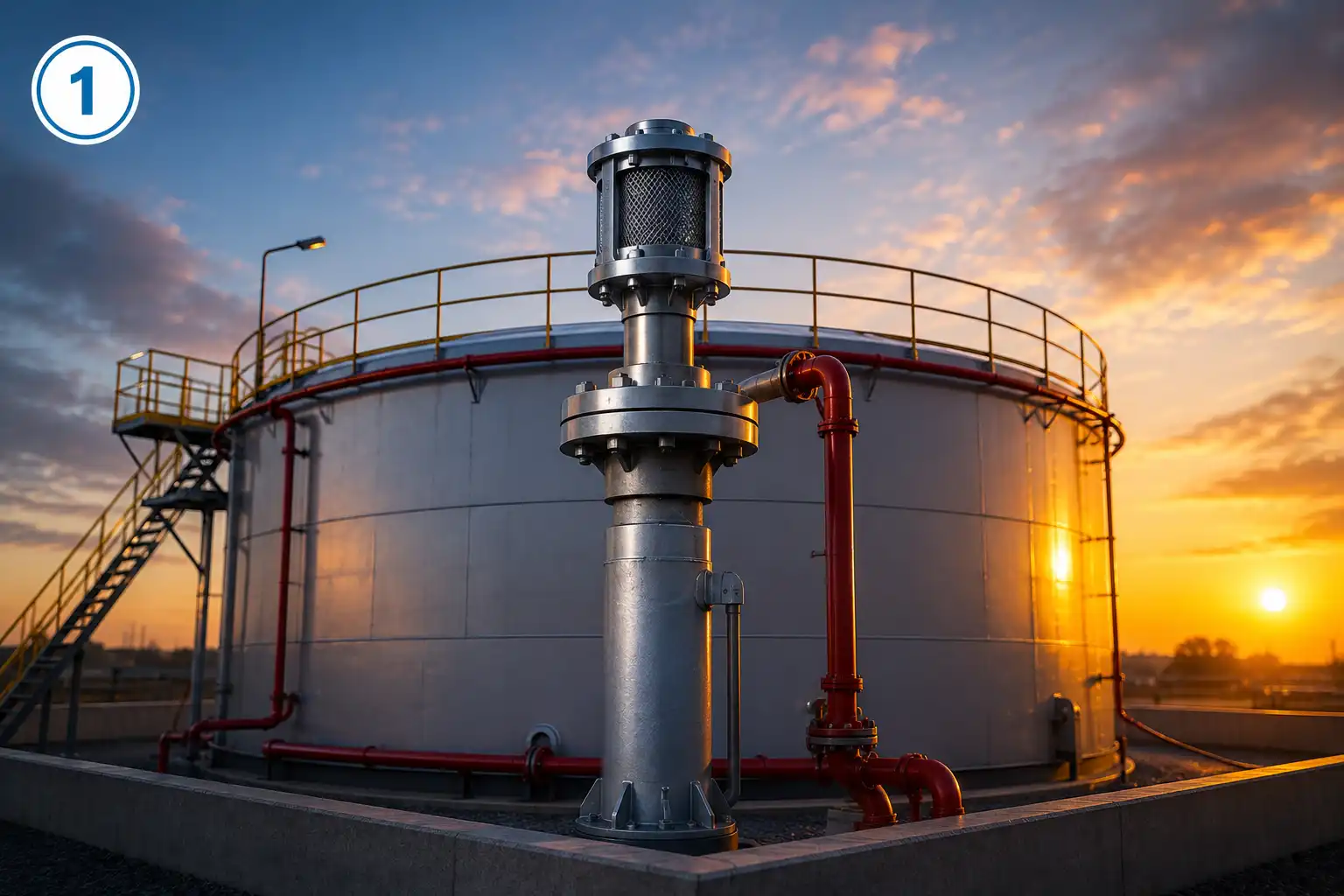
The oil and gas sector handles the broadest range of flammable hydrocarbons — crude
oil,
LPG,
naphtha, natural gas, and refined fuels — in enormous volumes. Atmospheric
storage
tanks breathe vapors continuously through conservation vents as product
levels
change
and temperatures fluctuate. Without a properly rated end-of-line flame
arrester on
these vents, a nearby ignition source — lightning strike, static discharge from
loading,
or
hot work
— can drive a flame directly into the tank headspace, triggering a catastrophic
boilover or BLEVE (Boiling Liquid Expanding Vapor
Explosion).
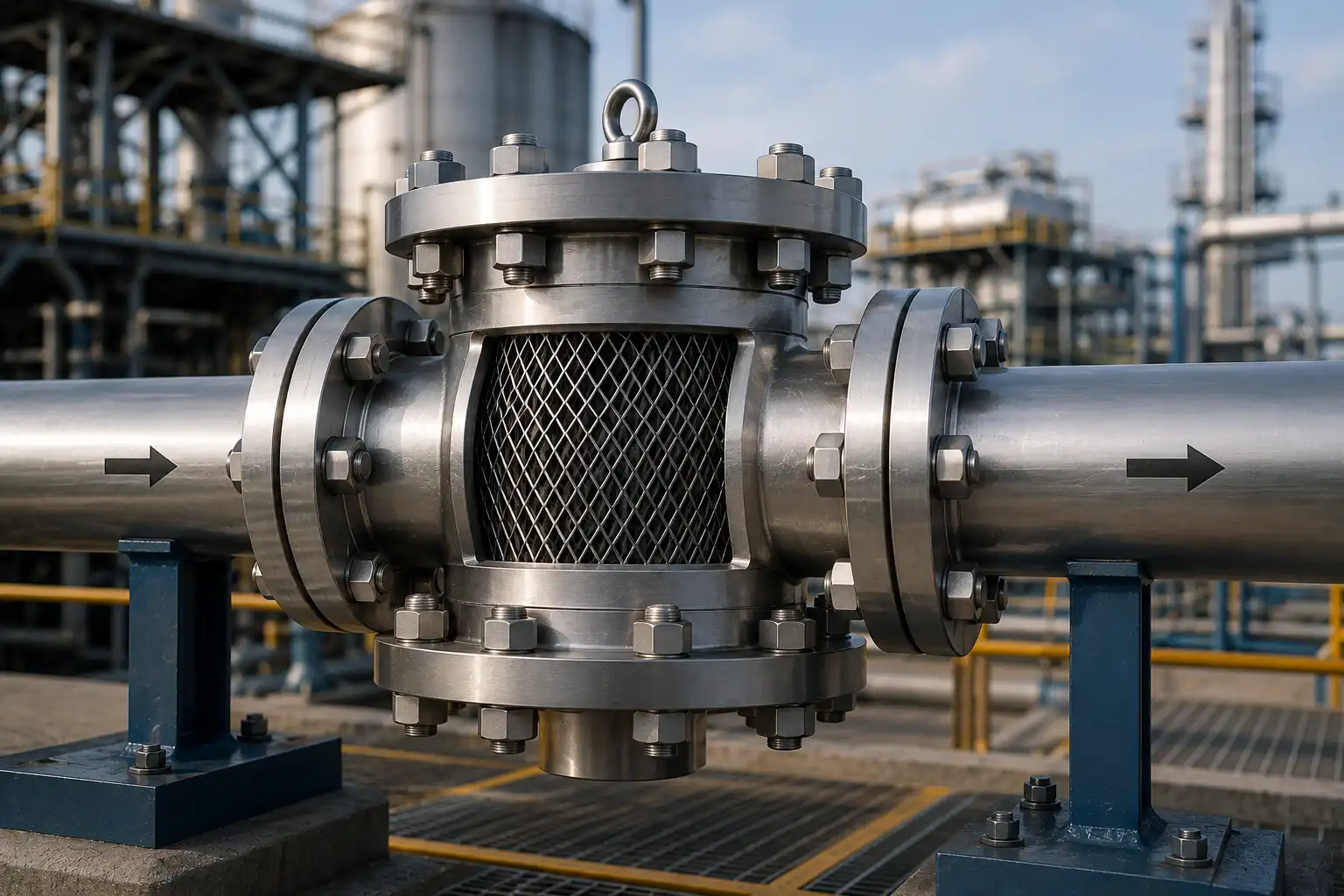
In pipeline networks and flare systems, in-line
deflagration
and
detonation arresters protect against backflash
traveling
upstream from
flare tips or incinerators. Long uninterrupted flare header runs create ideal
conditions
for
DDT —
only a detonation-rated arrester installed at the correct pipe L/D ratio will hold.
Applicable standards: API 2000, API 2210, ISO 28300,
OISD-STD-117
(India), EN ISO 16852. Flame arresters on atmospheric storage tanks are a mandatory
requirement
under
PESO regulations for Class A, B, and C petroleum products in India.
tank vent flame arresterflare line arresterBLEVE
preventionstorage tank explosion protectionAPI 2210 flame
arresterpetroleum vapor controlLPG flame trap
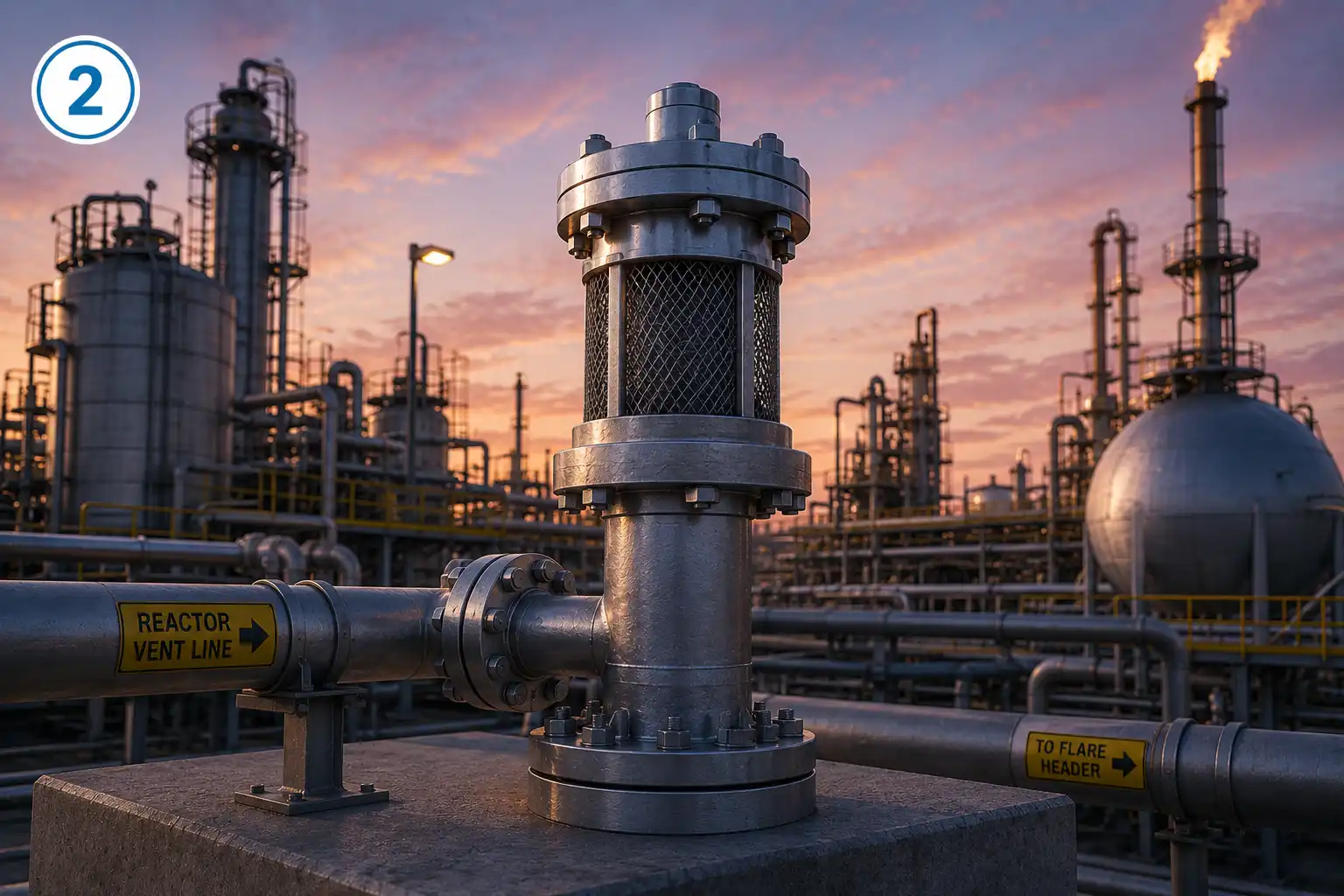
Chemical plants process a wide spectrum of flammable substances — benzene, toluene,
ethylene,
acetone, methanol, cyclohexane — many of which fall into Gas Group IIB or
IIC,
requiring higher-specification flame arresters with tighter MESG-rated element gaps.
Distillation
columns, solvent recovery units, reactor vent lines, and effluent gas headers are
all points
of
potential flame propagation risk.
The hazard is compounded by elevated process temperatures and
pressures,
which shift flammable limits and increase ignition severity. For hydrogen service
(Group
IIC),
standard IIA or IIB-rated arresters provide zero protection — yet this substitution
error is
a known
root cause of serious incidents in chemical facilities.
Key hazard: Deflagration-to-detonation transition (DDT) in
long
reactor vent headers. Group IIC gases like hydrogen require flame arresters specifically tested
and
certified for that gas group under EN ISO 16852.
deflagration arrester chemical plantGroup IIC flame
arresterhydrogen
flame arresterethylene explosion protectionreactor vent
safetyMESG gas group classificationdetonation arrester
pipeline
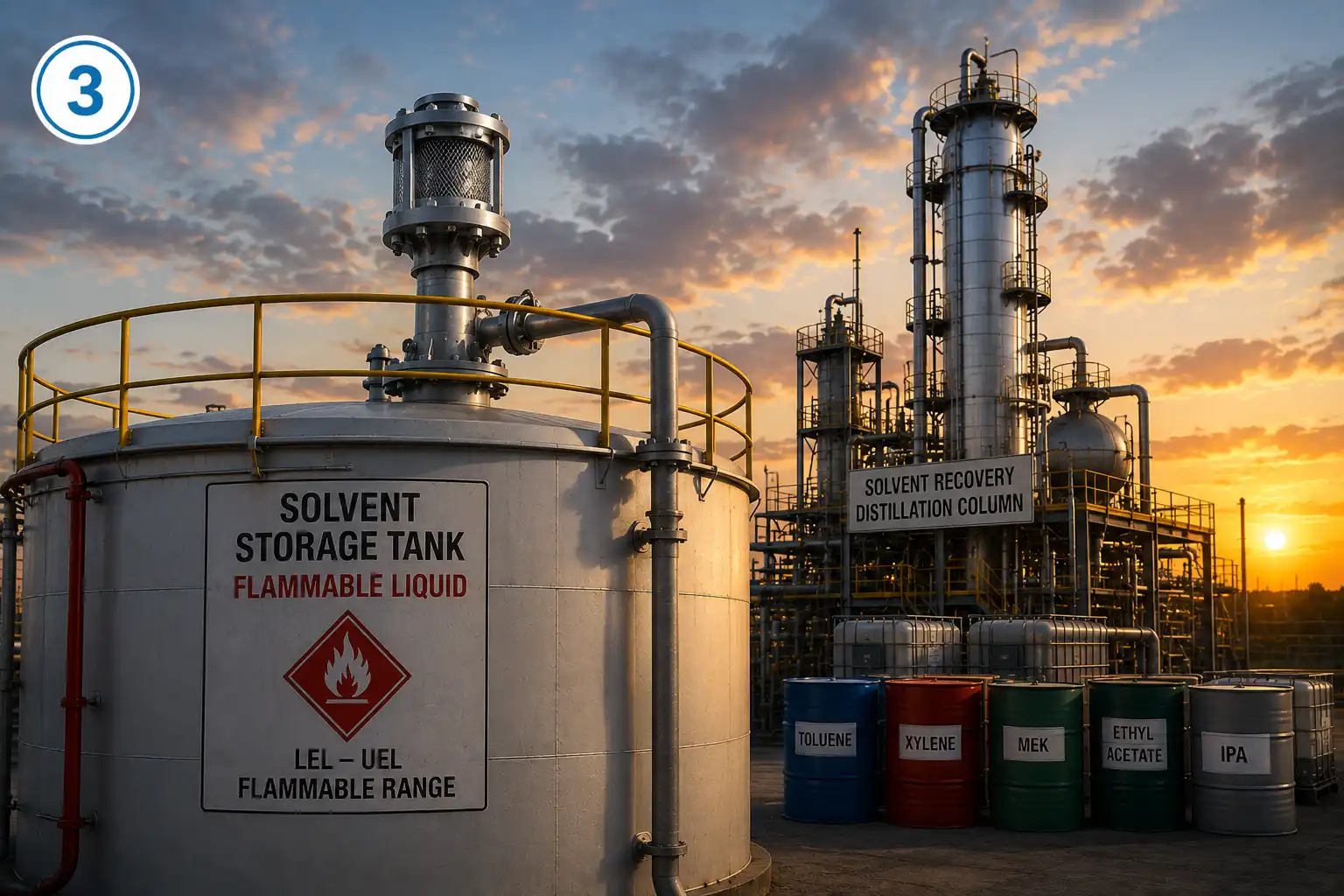
Solvent-based paint production involves large-scale handling of toluene, xylene, MEK
(methyl
ethyl
ketone), ethyl acetate, and IPA — all highly flammable, low-flash-point liquids
generating
vapor-air
mixtures well within their flammable range (LEL–UEL) at ambient
temperatures.
Mixing vessels, thinning tanks, and bulk solvent storage are potential flashback
hazard
points.
Static electricity generated by high-velocity
solvent
transfer is a common ignition source. An end-of-line flame arrester
on each
solvent
tank vent, combined with proper earthing and bonding, provides the passive
protection needed
to
prevent ignition traveling back into the vessel.
Critical application: Solvent recovery distillation columns —
where
hot solvent vapors are concentrated — require thermally stable flame arresters rated for
sustained burning at the arrester face, not just transient flame quenching.
solvent storage tank flame arresterpaint plant explosion
safetyLEL UEL
flammable rangestatic ignition preventionsolvent recovery
distillation
safetyend-of-line flame arrestor
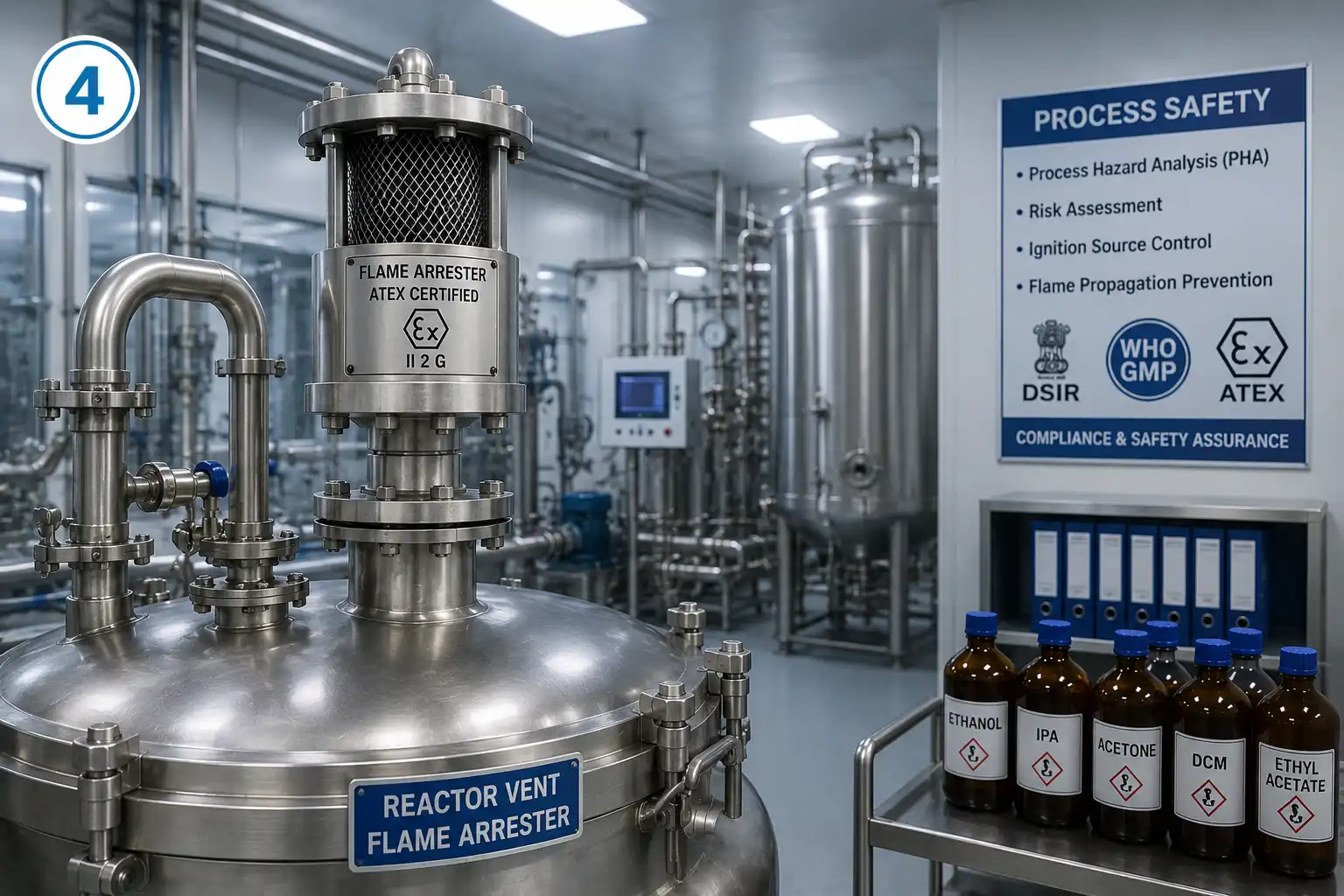
Active pharmaceutical ingredient (API) synthesis relies on flammable solvents —
ethanol, IPA,
acetone, DCM, ethyl acetate — throughout reactions, crystallizations, and
purifications.
Reactor vents, solvent storage tanks, and vacuum systems all
require flame
arrest
protection. Multipurpose batch reactors pose a particular challenge: solvent type
and
concentration
change with every batch, requiring versatile arrester designs covering multiple gas
groups.
Regulatory frameworks including DSIR, WHO GMP, and NFPA
30
increasingly require formal Process Hazard Analysis (PHA)
documentation —
and
unprotected flame propagation paths are a standard gap identified in these studies.
Regulatory note: ATEX-certified flame arresters provide
documented
proof of conformity required during DSIR and WHO GMP audits. Non-certified devices — even if
physically
similar — do not satisfy audit requirements in India or internationally.
pharmaceutical reactor vent flame arresterATEX certified flame arrester
Indiasolvent handling explosion protectionProcess Hazard Analysis
PHAWHO GMP process safetyAPI manufacturing safety
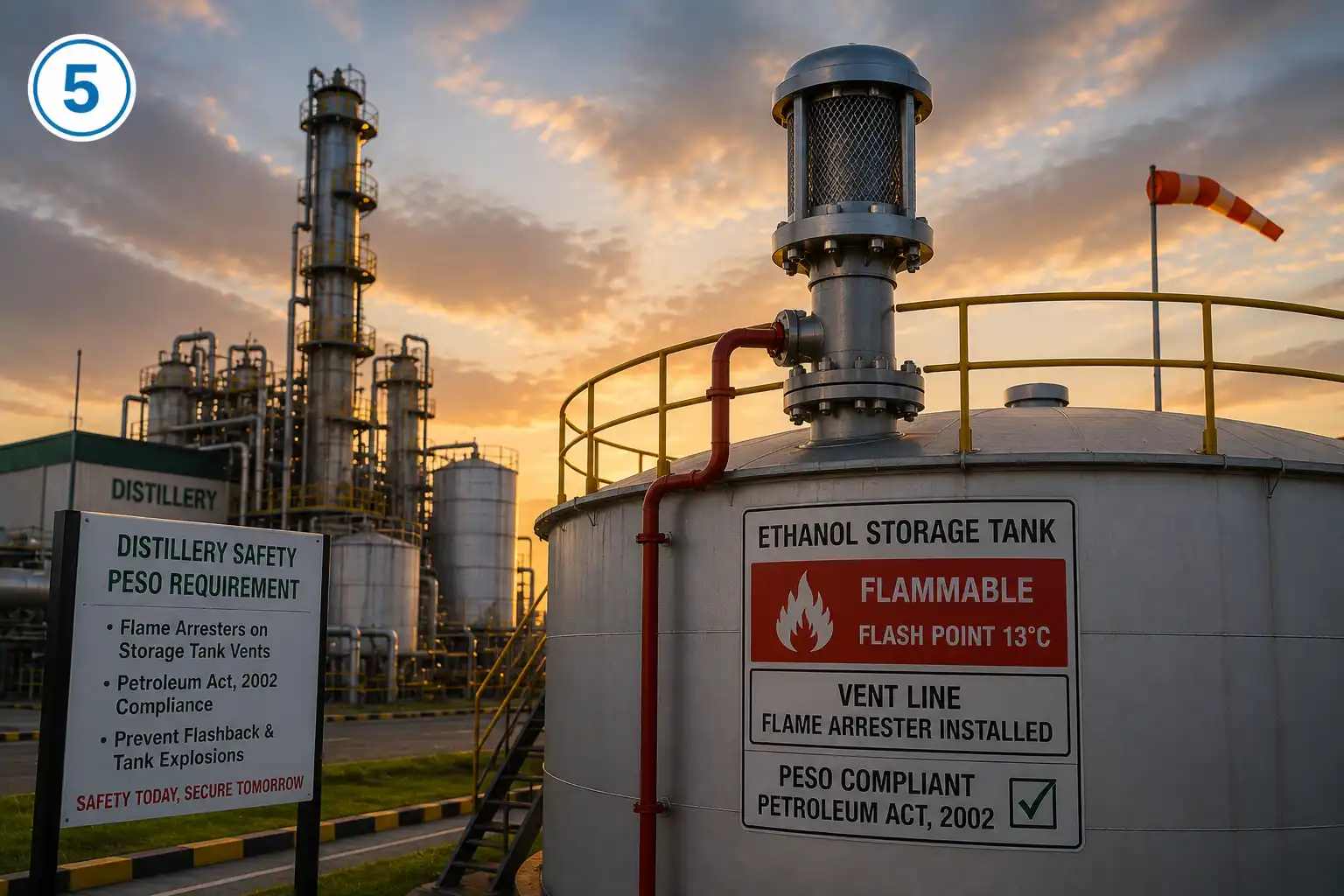
Ethanol (Group IIA, MESG 0.92mm) is produced and stored in vast quantities across
distilleries,
ethanol blending facilities, and industrial fermentation plants. Large atmospheric
storage
tanks for
rectified spirit, ENA (Extra Neutral Alcohol), and fuel ethanol
vent
flammable
vapor continuously — particularly during hot weather when tank temperature rises
above
ethanol's
flash point of 13°C.
A flash fire at a storage tank vent — ignited by lightning or a
grounding
fault during tanker loading — can drive flame into the tank headspace in
milliseconds. The
Petroleum Act 2002 and PESO licensing conditions
for
distilleries
explicitly require flame-arresting devices on vent lines for tanks above specified
capacities.
Industry context: Distillery and ethanol facility fires are
among the
most frequent industrial fire incidents in India. Most involve unprotected tank vents — directly
solved
by a correctly specified end-of-line flame arrester or conservation vent with integrated flame
arrester.
ethanol storage tank flame arresterdistillery explosion
protectionPESO
flame arrester requirementconservation vent with flame arresterENA
tank
vent safetyPetroleum Act 2002 compliance
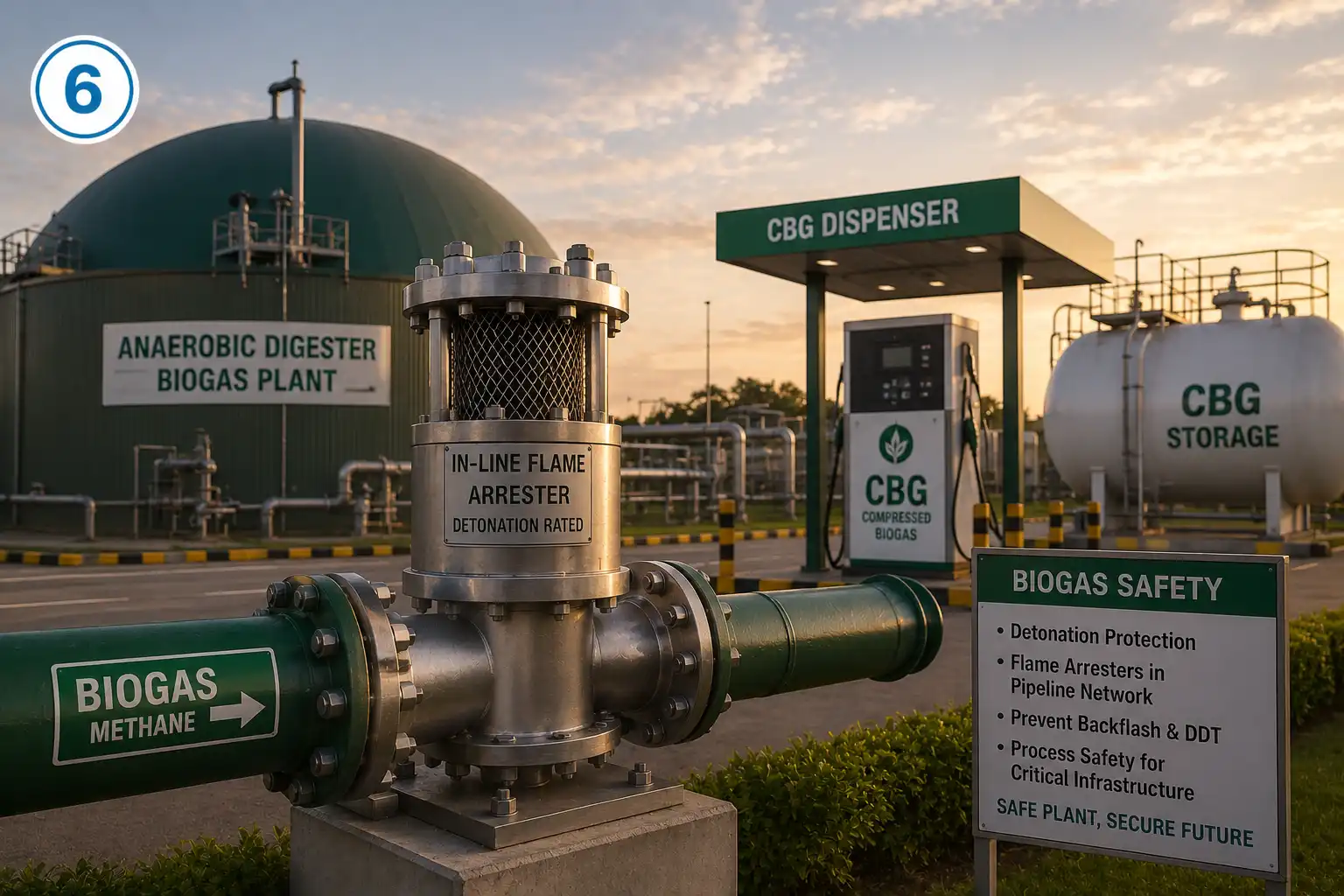
Biogas — a mixture of methane (55–70%) and CO₂ — is generated in anaerobic digesters
at
sewage
treatment plants, municipal solid waste facilities, and agricultural biogas plants.
Methane
falls in
Gas Group IIA but, given the scale of digesters and pipeline
lengths
involved, DDT
is a realistic hazard demanding detonation-rated in-line flame
arresters at
strategic points in the biogas distribution network.
Compressed Biogas (CBG) and CNG filling
stations
require
flame arresters at dispenser inlets and storage manifold connections. As India's
SATAT
scheme drives rapid biogas plant construction, the risk of
under-specified
safety
systems in newly commissioned plants is significant and growing.
Emerging priority: Many biogas plants designed by civil and
structural
teams lack process safety input. Flame arresters are frequently absent from initial designs and
only
specified following audit — or, in worst cases, following an incident.
biogas flame arrestermethane pipeline detonation arresterCBG
plant
safetyanaerobic digester explosion protectionSATAT scheme process
safetyCNG dispenser flame trap
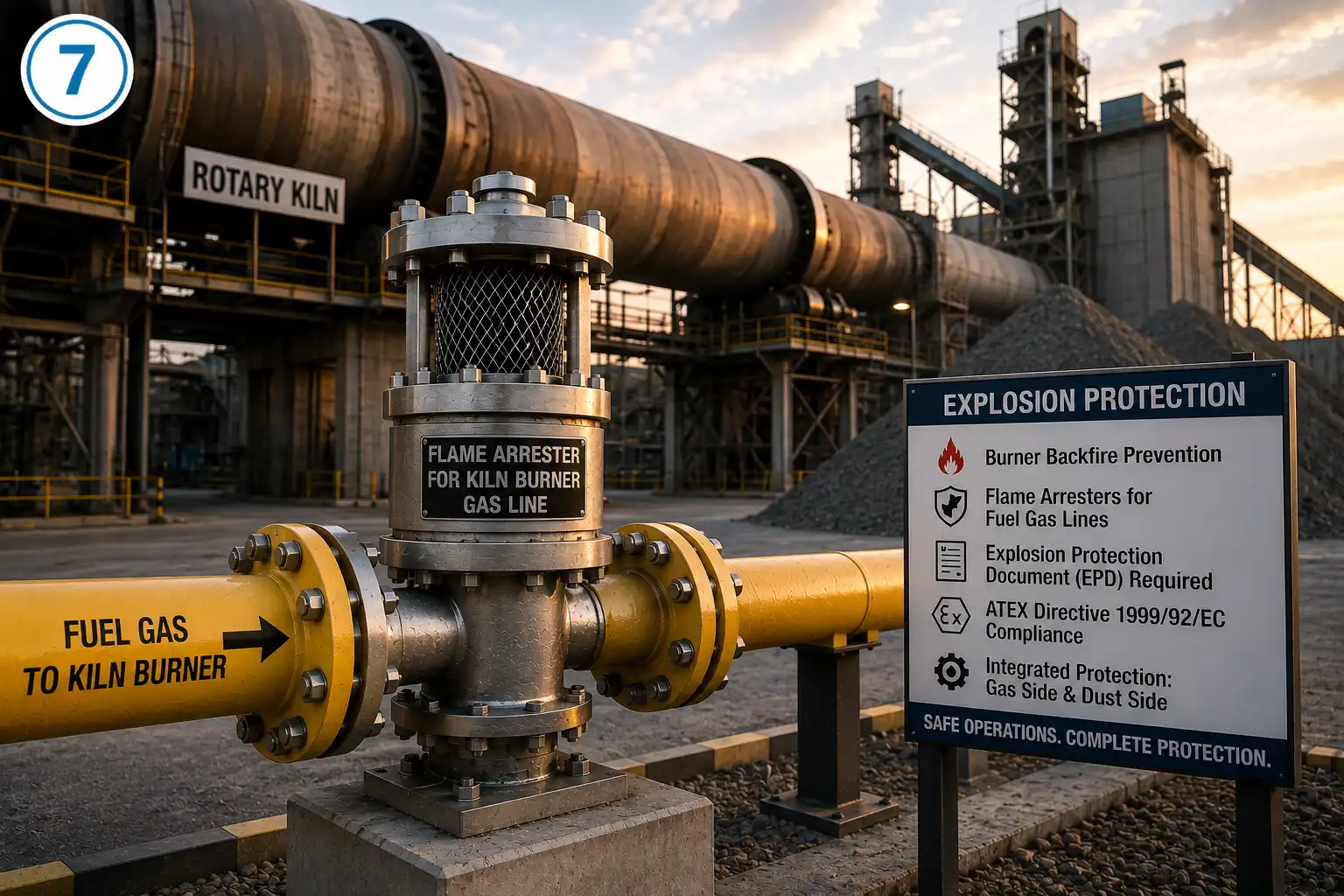
While flame arresters are primarily vapor-phase devices, their use in fuel gas lines
feeding
rotary kilns, coal mill dryers, and direct-fired heaters is
critical and
often
overlooked. Natural gas and LPG burner feed lines must be protected from
burner
backfire — a sudden reversal of flame into the fuel supply line
triggered by
pressure
fluctuation or gas composition change.
In coal-fired systems, the interaction
between
combustible
dust clouds and gas-phase burners creates a layered explosion hazard. The gas-side
flame
arrester is
a prerequisite for a complete and compliant Explosion Protection Document
(EPD)
under ATEX Directive 1999/92/EC.
Cross-hazard note: Kilns and dryers with both gas burners and
combustible dust handling need integrated explosion protection: explosion vents for the dust
side, flame
arresters for the gas supply side. Specifying only one is incomplete protection.
kiln burner flame arrestercoal mill gas line protectionburner
backfire
preventionexplosion protection document EPDATEX Directive
1999/92rotary dryer gas safety
In-line vs end-of-line flame arresters: choosing the right type
Selecting the wrong type of flame arrester for a given installation point is one of the most
common
engineering errors in process safety. The two primary categories are defined by their
installation
position and the flame scenario they must withstand.
Type 1
→ In-line flame arrester
Installed within a pipeline, away from open atmosphere. Must be rated for
deflagration or detonation depending on pipe L/D ratio and vapor gas group. Used in
chemical, oil &
gas, biogas, and flare header applications. Defined under ISO 16852 section 3.22.
Bi-directional
models available for reverse-flow scenarios.
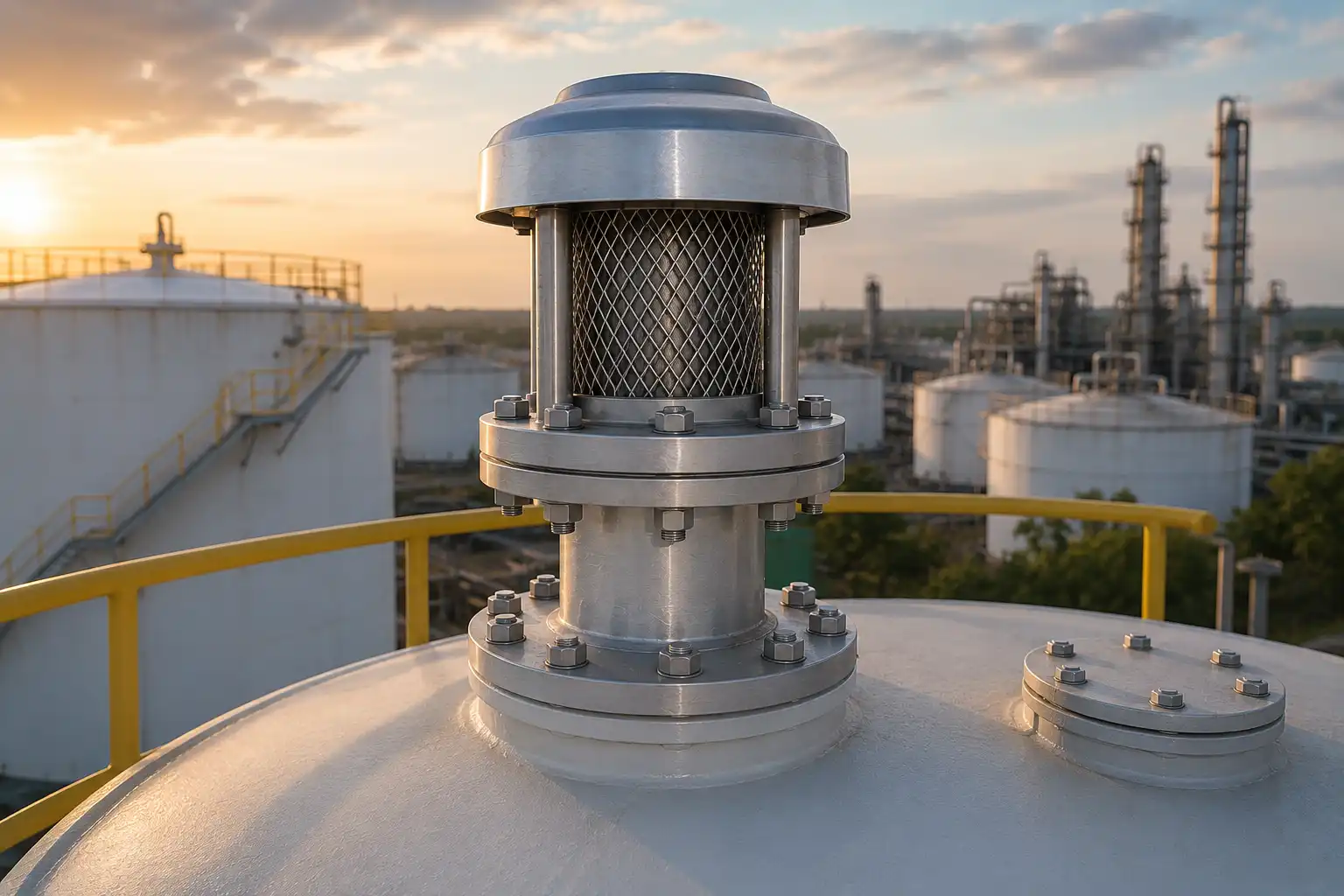
Type 2
→ End-of-line flame arrester
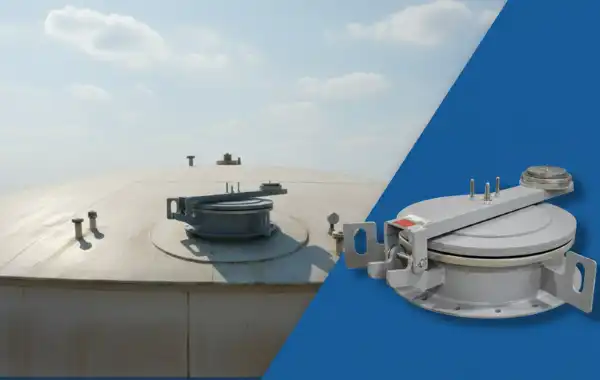
Fitted at the open end of a vent or breather pipe — directly at the
atmosphere
interface. Prevents atmospheric ignition from entering the vessel. Common on storage tanks
for
solvents, fuels, and ethanol. Often combined with breather valves (PVRV) into a single
conservation
vent unit.
Applicable standards & regulations

| Standard / Regulation |
Scope |
Applicable Industries |
| EN ISO 16852 |
Type testing, performance requirements, and classification of flame arresters |
All industries — primary international standard |
| API 2000 / ISO 28300 |
Venting of atmospheric and low-pressure storage tanks |
Oil & gas, petrochemical, chemical storage |
| API 2210 |
Flame arresters for vents of tanks storing petroleum products |
Petroleum storage terminals, refineries |
| ATEX Directive 2014/34/EU |
Equipment certification for explosive atmospheres (Zone 0, 1, 2) |
All ATEX hazardous area classified zones |
| PESO / Petroleum Act 2002 |
Indian statutory requirements for petroleum storage safety |
Refineries, distilleries, fuel depots (India) |
| OISD-STD-117 |
Fire protection for petroleum depots and marketing terminals |
PSU fuel depots and terminals (India) |
| NFPA 30 / NFPA 67 |
Flammable liquid storage; guidance on explosion prevention |
Pharmaceutical, food, chemical (US-aligned) |
| ATEX Directive 1999/92/EC |
Minimum requirements for worker protection in explosive atmospheres |
All industries with ATEX classified areas |
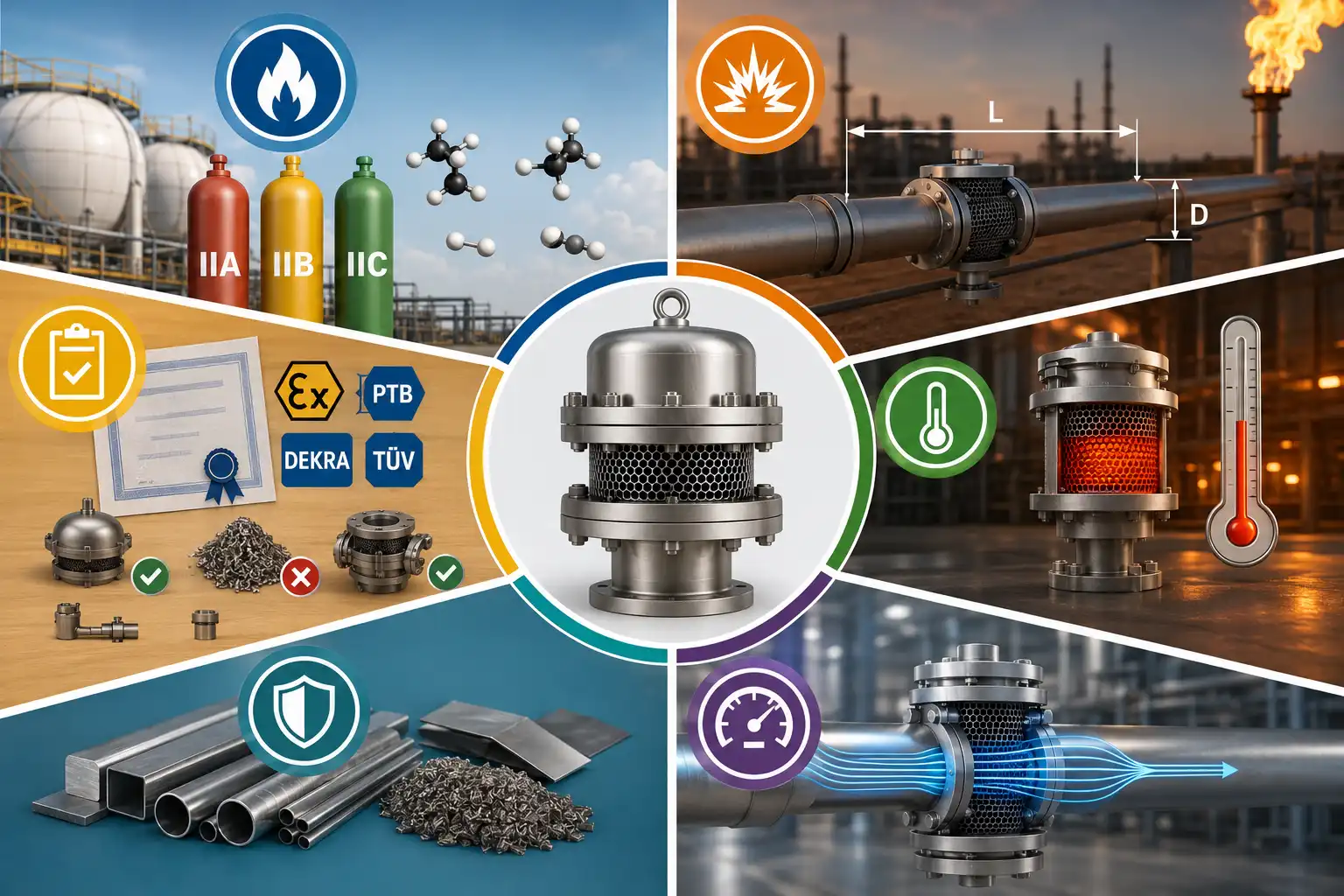
Key selection criteria for flame arresters
Gas group classification (IIA / IIB / IIC): Based on the MESG of the flammable
gas or
vapor. Propane and butane are Group IIA; ethylene and hydrogen sulfide are Group IIB; hydrogen
and
acetylene are Group IIC. An under-rated arrester provides no protection.
Flame scenario (deflagration vs detonation): Determined by the pipe L/D ratio —
the
distance from the potential ignition source to the arrester, divided by the pipe diameter. Below
a
critical L/D, a standard deflagration arrester suffices. Above it, a detonation-rated
flame
arrester is mandatory. The transition point depends on the specific gas group.
Operating temperature and pressure: High-temperature applications — such as
incinerator
vent lines or thermal oxidizer feeds — require special materials and thermally stable arrester
elements.
Standard arresters may fail due to heat soak at the arrester face if not rated for sustained
burning.
Flow rate and pressure drop: A poorly sized flame arrester creates excessive
back-pressure in the protected system. Proper sizing using the manufacturer's flow
coefficient
(Cv) data ensures adequate throughput without compromising flame-quenching
performance.
Material of construction: Stainless steel SS 316L is standard for most process
applications. Hastelloy, Inconel, or titanium may be required for corrosive service — such as
chlorine-contaminated vents or acid gas streams in chemical plants.
ATEX-certified flame arresters are type-tested to EN ISO 16852 under worst-case conditions —
including
stable burning and overdriven detonation scenarios. Certification from a Notified Body (PTB,
DEKRA, TÜV)
is not interchangeable between gas groups, end-of-line and in-line configurations, or pipe
sizes. Always
verify the exact certification scope before installation.
FAQS
Frequently Asked Questions
A deflagration flame arrester is
designed to quench a
subsonic
flame
front traveling at less than the speed of sound. A detonation
arrester
(DFA) is
rated
to stop a supersonic detonation wave and its associated shock pressure.
Detonation
arresters are
required wherever the pipeline L/D ratio exceeds the critical DDT
threshold for the
specific gas
group —
typically beyond L/D 50 for Group IIA gases. They are physically more
robust, larger,
and more
expensive
than deflagration-only units.
No. A common manifold changes the effective L/D ratio
and creates
cross-contamination
risk between tanks. Best practice per API 2000 and
EN ISO
16852 is to
install individual flame arresters at each tank vent — or at each branch
connection
before the
common
header — so that each vessel is independently protected regardless of
what occurs in an
adjacent
tank.
Manufacturer guidance and industry standards (API 2000,
ISO 16852)
recommend
annual inspection as a minimum. Arresters in dirty
service — where
polymerization,
fouling, or ice formation can block the element — may require quarterly
inspection.
After any
confirmed
or suspected flame arrest event, the arrester must be inspected and the
element replaced
before
the
system is returned to service.
No — though they are frequently installed together. A
breather
valve
(also called a pressure/vacuum relief valve or PVRV) controls the
pressure inside a
storage
tank. A
flame arrester prevents flame propagation through the
vent opening. For
most
flammable
liquid storage tanks, the correct installation is a conservation
vent with
integrated
flame
arrester — combining both functions in a single unit.
ATEX (ATmosphères EXplosibles) is the European framework
for equipment
used in
explosive
atmospheres, governed by EU Directive 2014/34/EU. In India,
PESO
(Petroleum and
Explosives Safety Organisation) accepts ATEX-certified products for use
in hazardous
area
applications.
Specifying an ATEX-certified, EN ISO 16852-tested flame arrester is the
most
straightforward
path to
regulatory compliance and audit readiness for Indian process facilities.
A flame arrester operates in
gas/vapor-phase pipelines
and vent
lines,
quenching a flame front within a narrow-passage element. An
explosion
vent (or
explosion relief panel) is installed on vessels, ducts, or enclosures to
relieve
over-pressure
generated
by a dust or gas explosion — it provides pressure relief, not flame
quenching. Both
devices are
part of
an integrated explosion protection system but serve
different functions
and are
not
interchangeable.
The cost of skipping flame arresters
The economics of flame arrester specification are straightforward. A properly engineered,
ATEX-certified
in-line or end-of-line flame arrester — sized for the correct gas group, pipe diameter, and
flame
scenario — represents a fraction of a percent of typical plant capex. Against this, the
consequences of
omission include unplanned downtime, regulatory enforcement action, insurance invalidation,
potential
criminal liability under the Factories Act 1948, and in the worst case,
irreversible
harm to personnel and infrastructure.
Beyond direct costs, increasingly stringent process safety regulations in India
— driven
by PESO, CPCB, and the Factories Act — are closing the gap between best international practice
and
statutory minimum requirements. Facilities are now subject to formal HAZOP
studies,
Process Hazard Analyses (PHA), and documented Layer of Protection
Analysis
(LOPA) — all of which identify unprotected flame propagation paths as critical gaps
requiring engineering controls. Flame arresters are among the most cost-effective engineering
controls
to close these gaps.
Need the right flame arrester for your process?
Ventil Components manufactures ATEX-certified in-line and end-of-line flame
arresters for
oil & gas, chemical, pharmaceutical, distillery, and biogas applications. Our engineers will
help
you identify the correct gas group, flame scenario rating, and pipe size for your installation.
Request a quote →