
How to Select a Flame Arrester for Storage Tanks
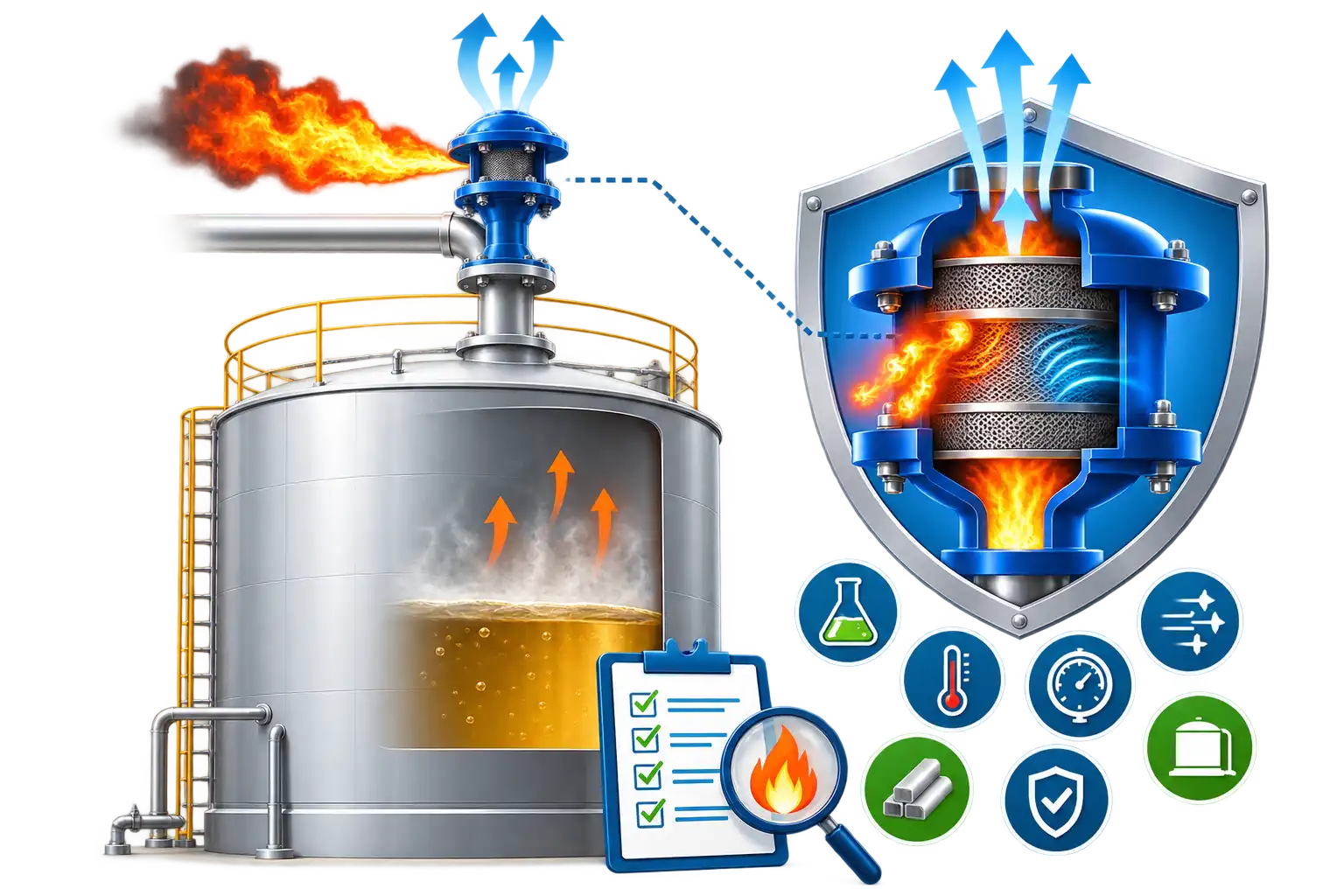
Storage tanks containing flammable liquids, hydrocarbons, solvents and other combustible products can develop flammable vapour-air mixtures in their vapour space. If an external ignition source reaches the tank through a vent or connected piping, flame propagation can create a serious process-safety risk.
A flame arrester is designed to prevent flame transmission through a process vent or piping connection by interrupting the flame and dissipating its heat.
But selecting a flame arrester is not simply a matter of choosing a size that matches the tank nozzle.
The correct selection depends on several factors, including:
- Stored product and vapour characteristics
- Gas/vapour explosion group
- Operating temperature
- Operating pressure
- Flow rate
- Venting arrangement
- Tank design
- Installation location
- Pressure drop
- Material compatibility
- Flame propagation characteristics
- Applicable standards and project specifications
For Indian chemical, petrochemical, pharmaceutical, oil & gas and bulk-storage facilities, proper selection is particularly important because tank protection often has to be considered alongside applicable PESO requirements, OISD standards, project specifications and internationally recognized standards.
ISO 16852 specifies performance requirements, test methods and limits of use for flame arresters intended to prevent flame transmission in explosive gas-air or vapour-air mixtures.
What Is a Flame Arrester?
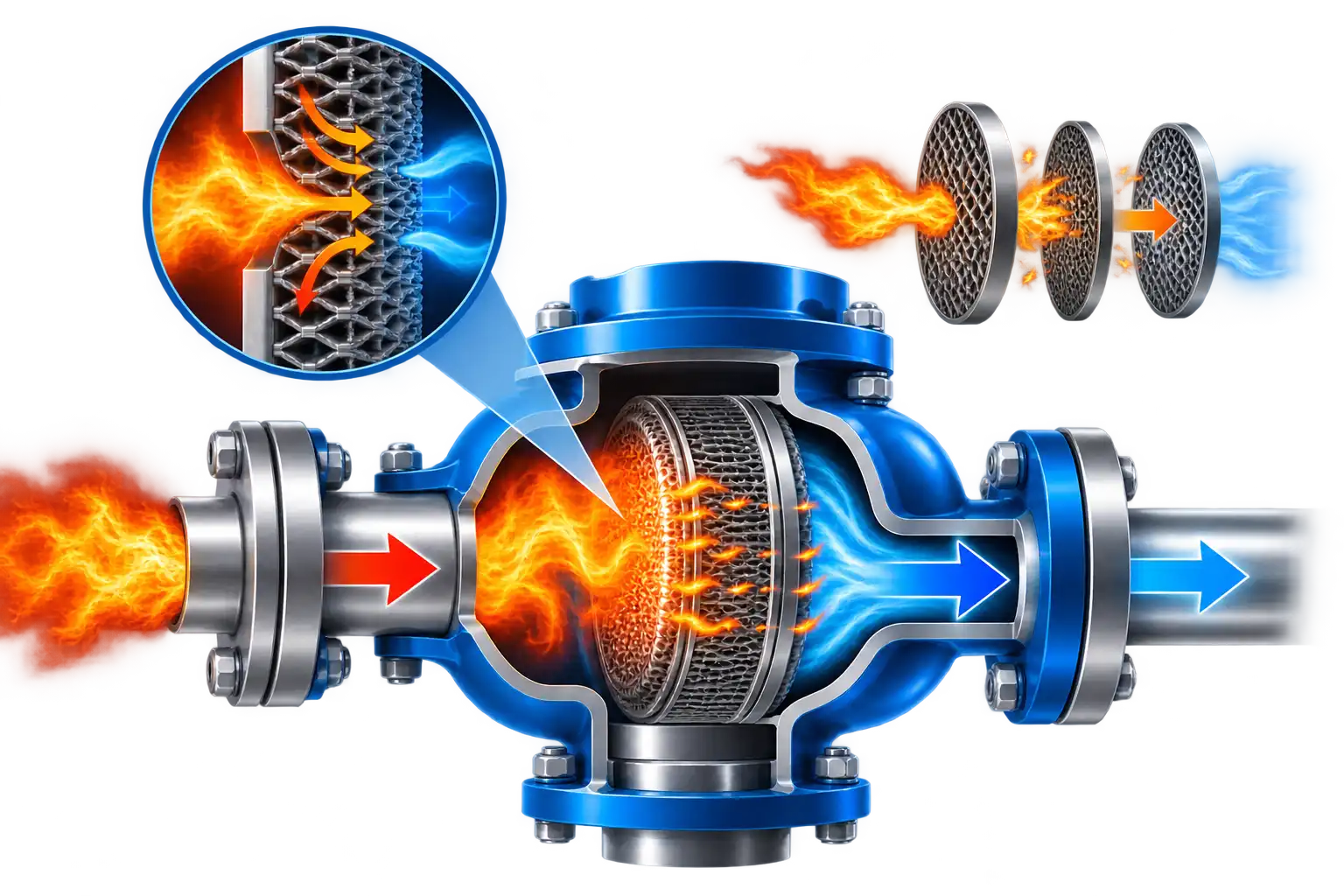
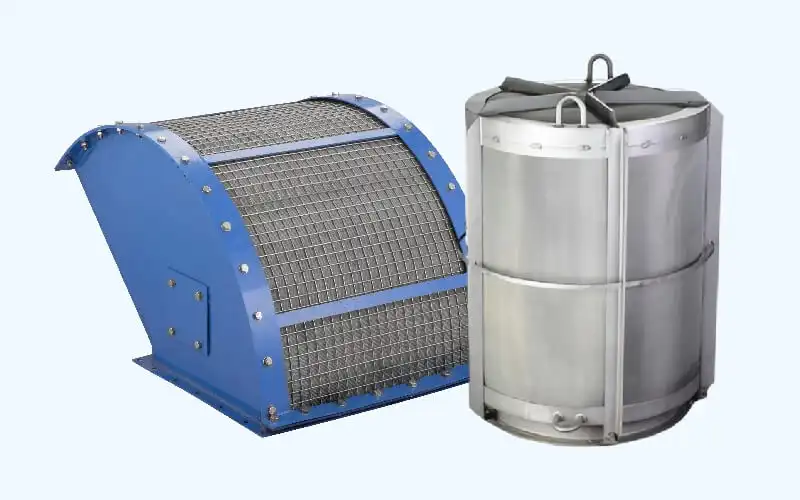
A flame arrester is a passive safety device installed in a vent line, tank connection or process pipeline to prevent flame propagation from one side of the device to the other.
The basic principle is relatively simple.
When a flame enters the arrester, it passes through a specially designed flame-arresting element containing narrow passages. These passages:
- 1. Break the flame front into smaller flame paths.
- 2. Absorb heat from the flame.
- 3. Reduce the temperature below the ignition temperature of the mixture.
- 4. Prevent the flame from continuing through the device.
This allows vapours and gases to flow during normal operation while reducing the risk of flame transmission.
However, a flame arrester is not a substitute for a pressure/vacuum relief device. Tank venting and flame protection are related but different safety functions.
Why Do Storage Tanks Need Flame Arresters?
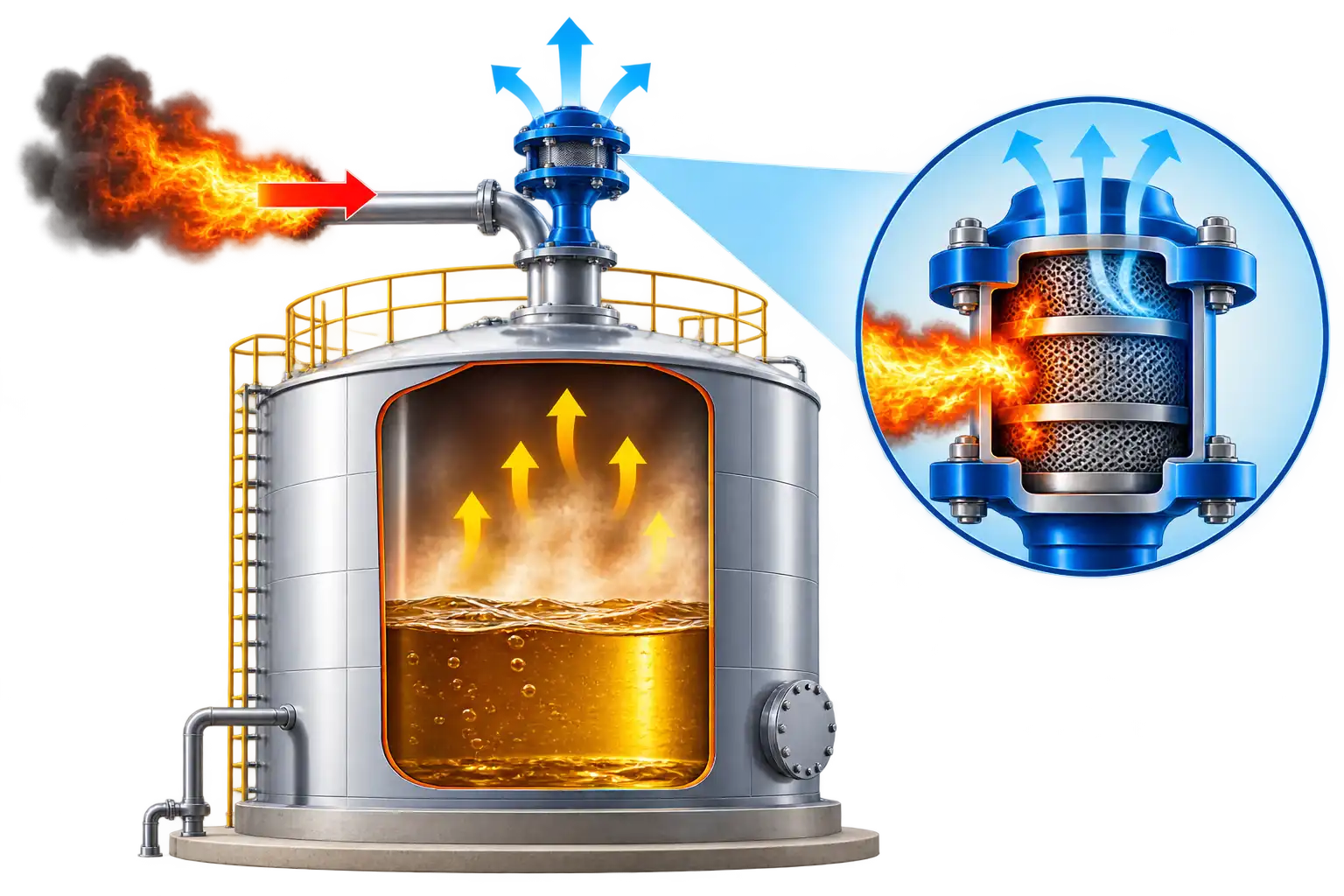
A storage tank containing a flammable liquid can have a potentially flammable vapour space above the liquid.
This can occur in tanks storing:
- Petrol and petroleum products
- Solvents
- Alcohols
- Chemicals
- Hydrocarbons
- Paint and coating materials
- Flammable pharmaceutical ingredients
- Edible oils or other combustible products, depending on process conditions
During filling, emptying, heating or changes in ambient conditions, the tank must breathe.
This creates a potential pathway between the tank vapour space and the atmosphere or connected process equipment.
If an ignition source is present outside the tank, flame can potentially propagate through the venting system.
API 2000 addresses venting of atmospheric and low-pressure storage tanks and discusses protection against flame transmission for tanks that can contain flammable vapour spaces. It also notes that flame arresters add pressure drop and that their selection should consider factors such as piping configuration, pressure, temperature, oxygen concentration, material compatibility and explosive gas group.
Flame Arrester vs Breather Valve: Are They the Same?
No.
This is one of the most important points for storage-tank engineers.
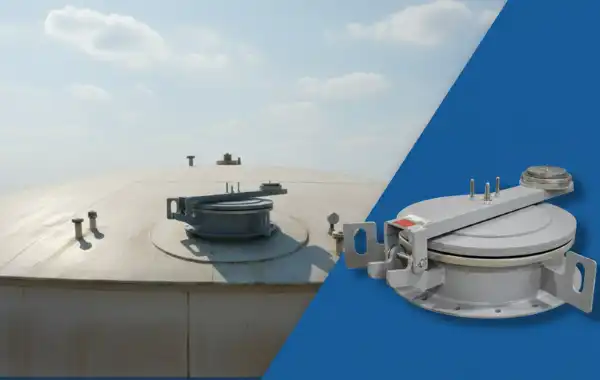
Breather Valve / Pressure Vacuum Relief Valve
A breather valve primarily manages:
- Tank overpressure
- Tank vacuum
- Product vapour losses
- Normal tank breathing
Flame Arrester
A flame arrester primarily addresses:
- Flame propagation
- Ignition hazards
- Fire transmission through vents or piping
In many applications, a storage tank may require both pressure/vacuum protection and flame protection, depending on the process, tank configuration and applicable design requirements.
API 2000 identifies pressure/vacuum valves as a normal venting option for atmospheric storage tanks and also discusses flame-arresting devices where flammable vapour spaces and open vent arrangements are involved.
In simple terms:
- Breather valve = controls pressure and vacuum.
- Flame arrester = helps stop flame propagation.
How to Select the Right Flame Arrester for a Storage Tank
Identify the Stored Product

The first step is to understand what is inside the tank.
You should provide the flame arrester manufacturer with:
- Product name
- Chemical composition
- Flash point
- Auto-ignition temperature
- Vapour pressure
- Molecular weight/density
- Flammability characteristics
- Operating concentration
- Vapour composition
Different gases and vapours have different combustion characteristics.
Therefore, a flame arrester suitable for one application may not automatically be suitable for another.
ISO 16852's selection information includes the service, gas/vapour composition, molecular weight or density and flow-related information.
Determine the Gas or Vapour Explosion Group
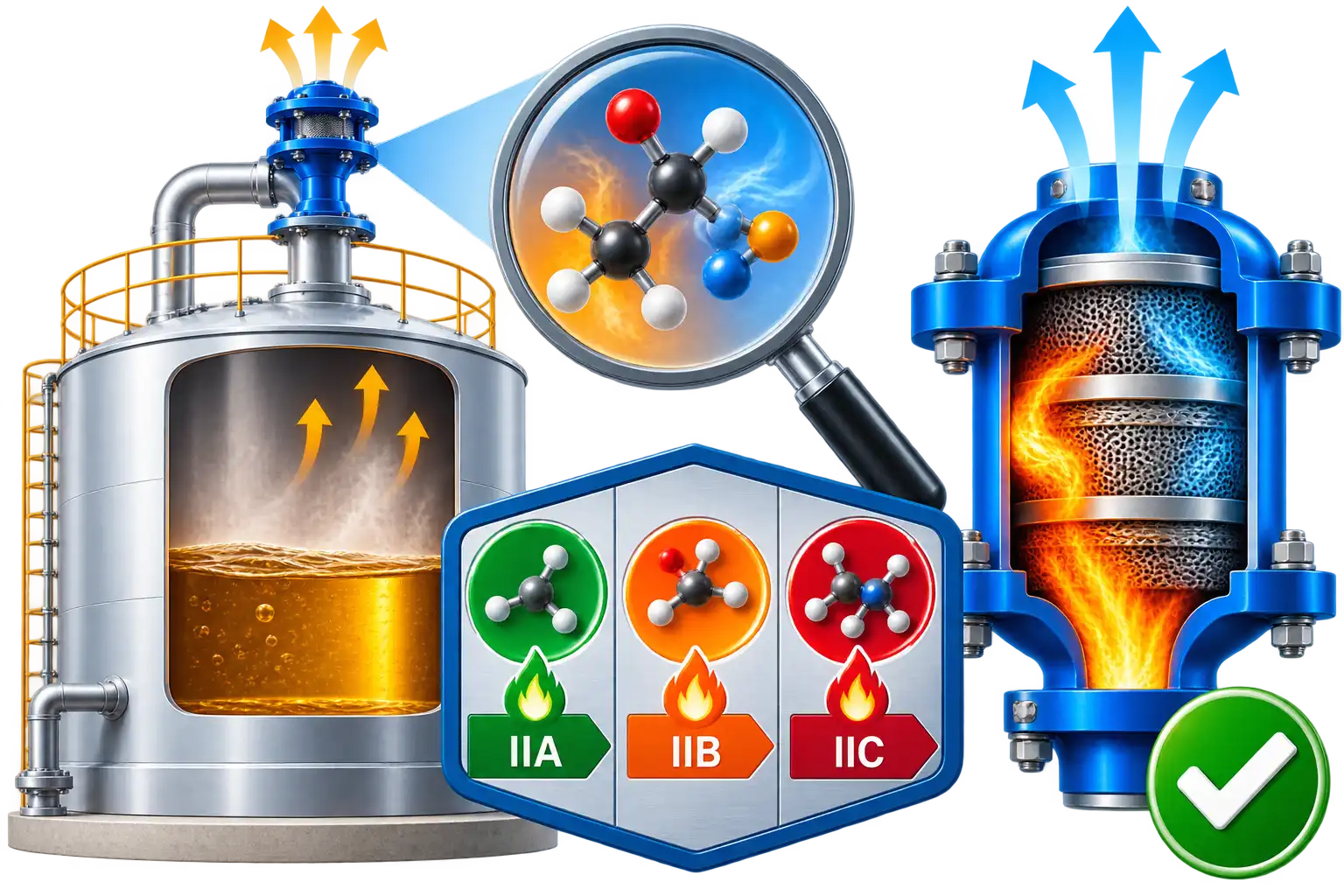
This is a critical selection parameter.
Flammable gases and vapours are classified into different explosion groups based on their characteristics.
Common groups encountered in industrial applications include:
- IIA
- IIB
- IIC
The required flame arrester must be suitable for the applicable gas/vapour group.
For example, an arrester selected without considering the actual vapour characteristics can result in an unsuitable safety solution.
Do not select a flame arrester based only on pipe diameter.
The process fluid and its combustion characteristics are equally important.
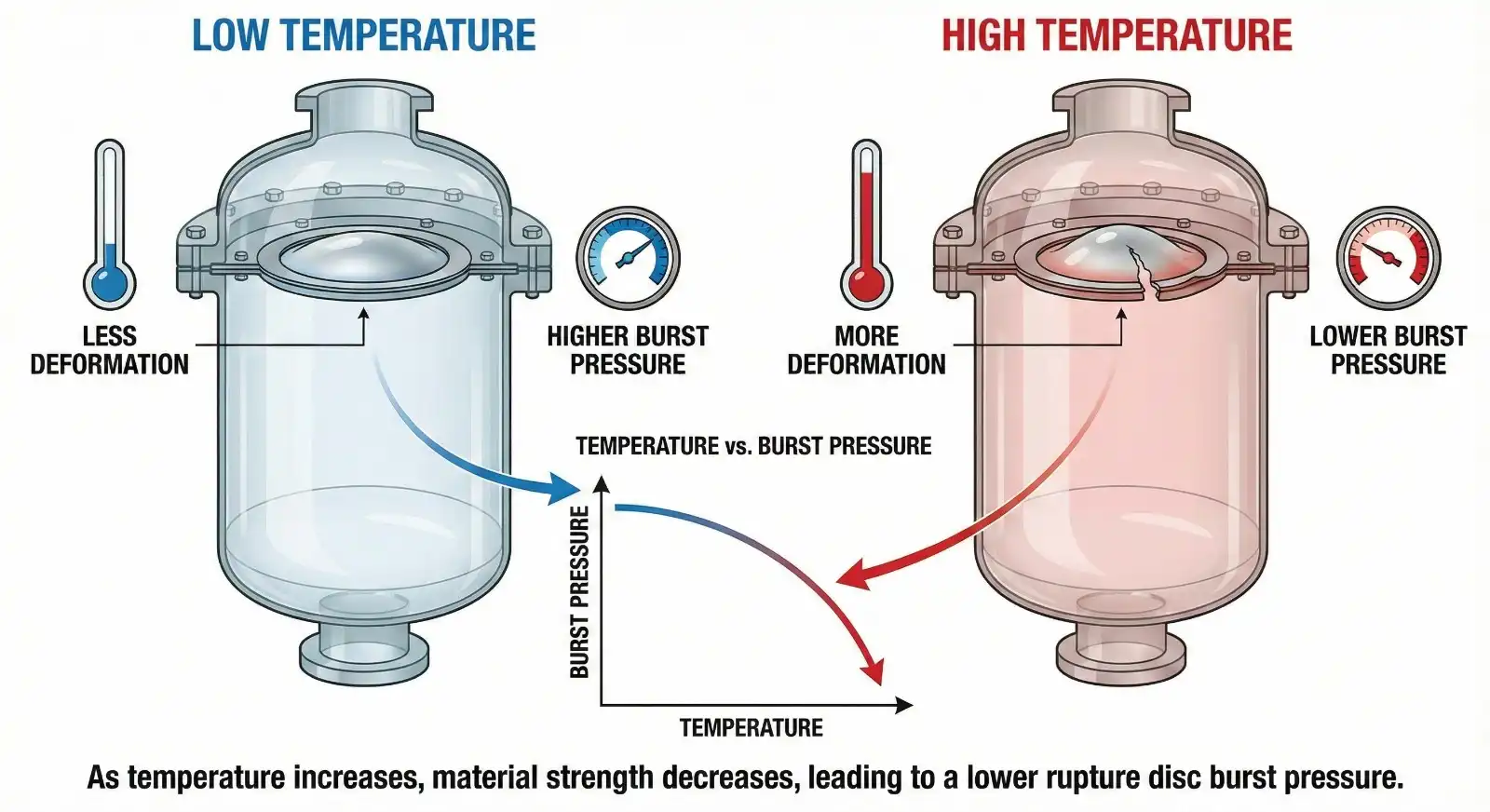
Check the Operating Temperature
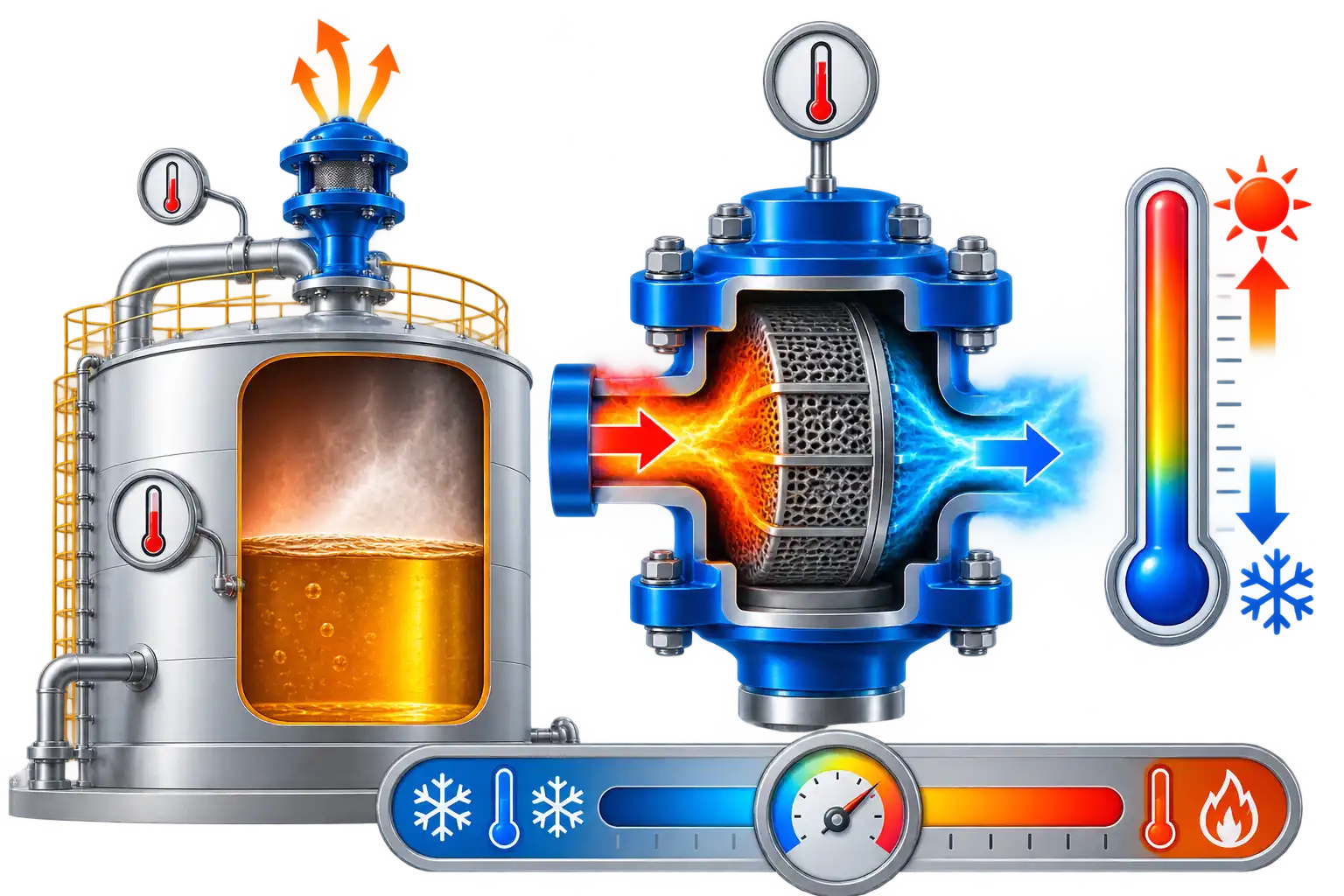
Temperature has a direct influence on flame-arrester selection.
Consider:
- Minimum operating temperature
- Normal operating temperature
- Maximum operating temperature
- Vapour temperature
- Ambient temperature
- Potential temperature during abnormal conditions
The flame arrester element and body materials must remain suitable for the expected temperature range.
ISO 16852 defines performance requirements and limits of use for flame arresters and specifies a standard scope that includes temperatures from −20°C to +150°C; applications outside the stated conditions require additional consideration/testing.
Determine the Required Flow Capacity
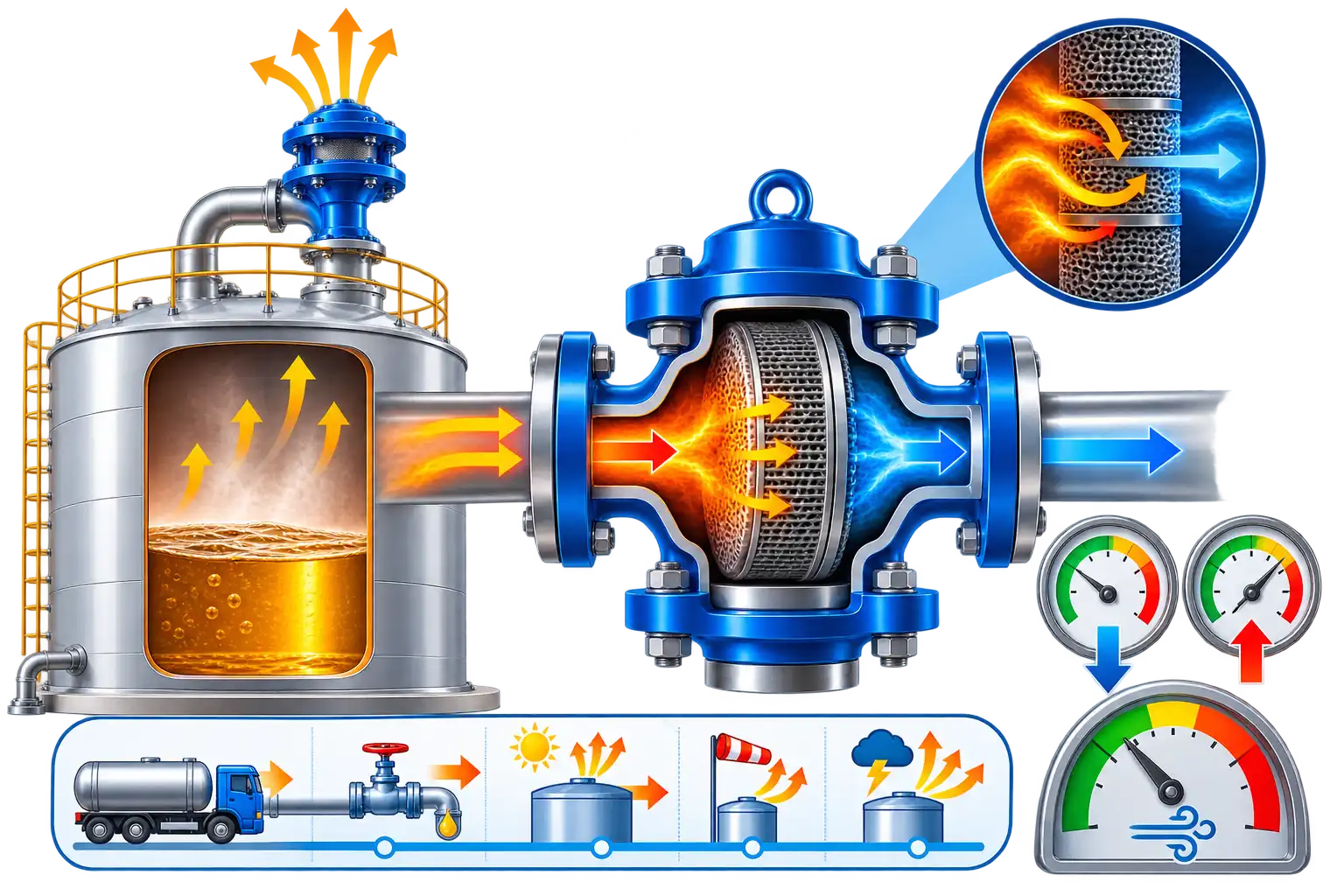
A flame arrester should not restrict tank breathing beyond acceptable limits.
Calculate or establish:
- Normal tank filling rate
- Normal tank emptying rate
- Thermal breathing requirement
- Vapour flow
- Gas flow
- Emergency venting requirement, where applicable
The flame arrester introduces pressure drop into the venting system.
Therefore:
Higher flow + smaller arrester = potentially higher pressure drop.
The arrester should be selected so that its pressure drop is compatible with the tank's allowable pressure and vacuum limits.
API 2000 specifically cautions that flame arresters increase pressure drop and recommends assessing the magnitude of this effect during selection.
Choose the Right Flame Arrester Type
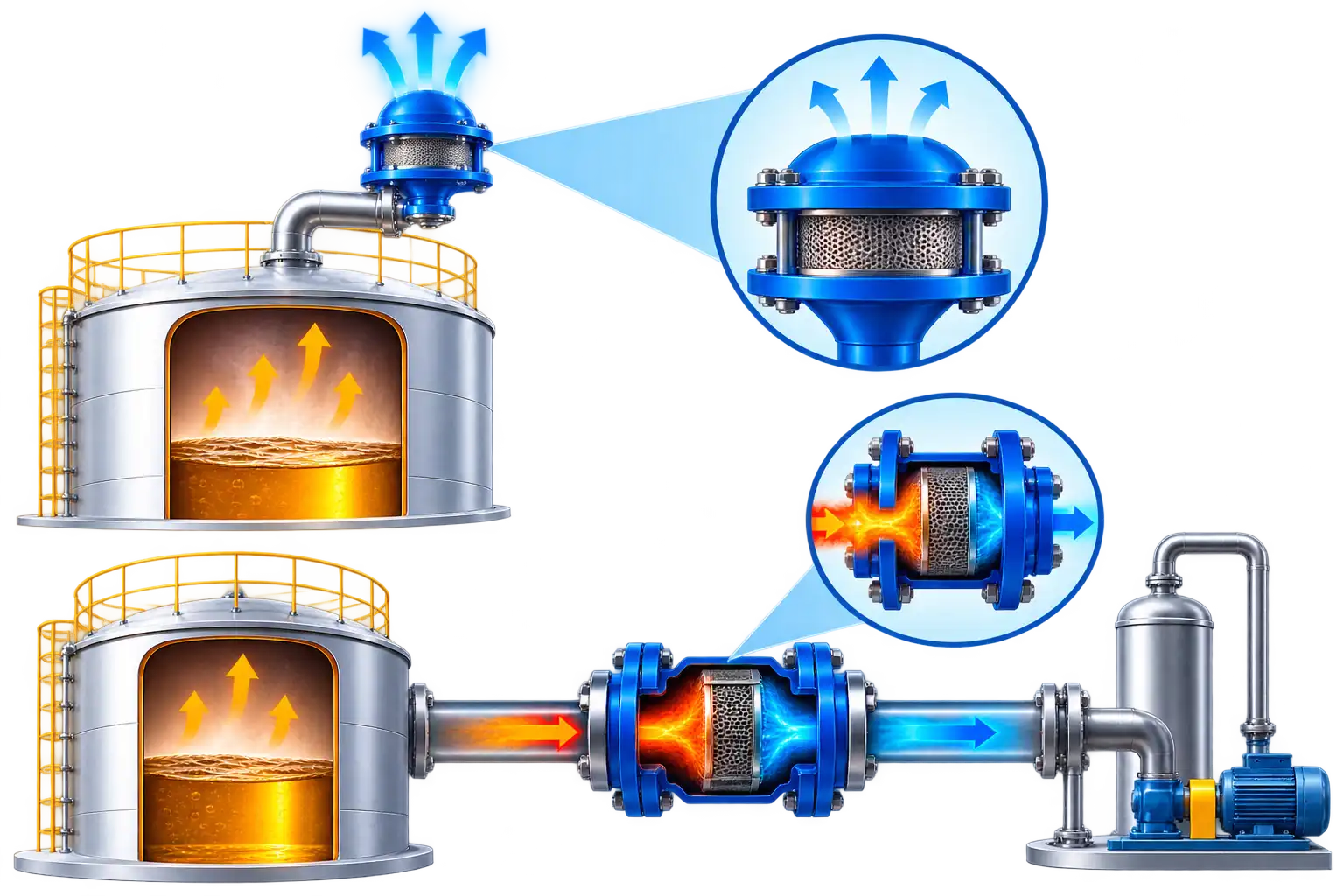
This is another major selection decision.
End-of-Line Flame Arrester
An end-of-line flame arrester is installed at the end of a vent line where the tank vents directly to atmosphere.
Typical applications include:
- Atmospheric storage tanks
- Solvent tanks
- Chemical storage tanks
- Hydrocarbon storage
- Tank farm applications
Its primary function is to prevent an external flame from propagating into the tank.
Typical arrangement:
Tank → Vent / Breather Connection → End-of-Line Flame Arrester → Atmosphere
An in-line flame arrester is installed within a piping system.
Typical applications include:
- Vapour recovery systems
- Process piping
- Tank-to-tank connections
- Gas handling systems
- Flammable vapour transfer lines
Typical arrangement:
Tank → Piping → In-Line Flame Arrester → Process Equipment
Consider Deflagration vs Detonation
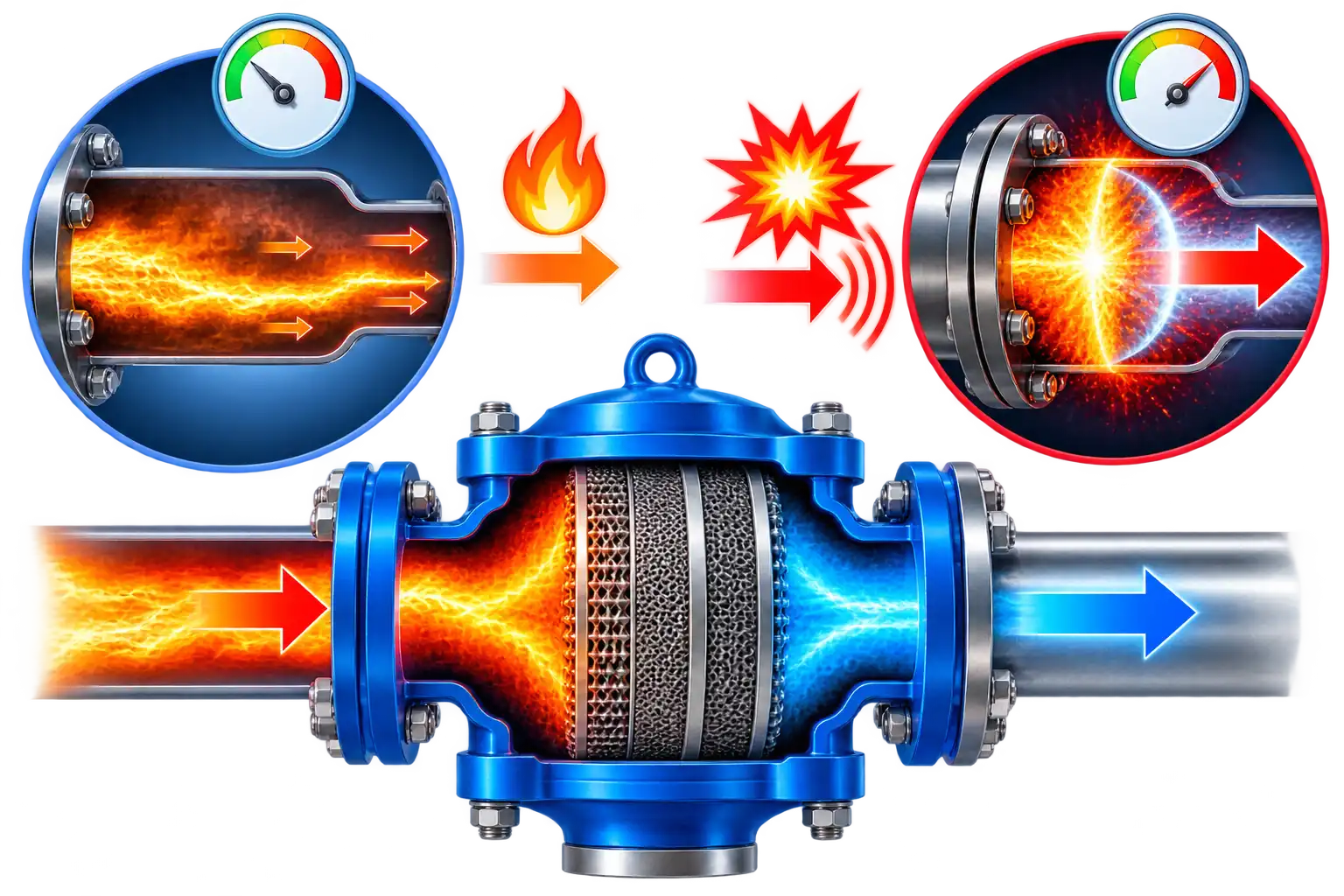
Not every flame propagation event behaves in the same way.
Depending on the system, the flame may propagate as a:
Deflagration
A subsonic combustion front.
Detonation
A much more severe combustion event involving a supersonic shock wave coupled with combustion.
The required flame-arrester design depends on the expected event and installation configuration.
For this reason, engineers should not select an arrester merely by searching for a generic "tank flame arrester."
The process conditions and potential flame propagation scenario need to be evaluated first.
Consider Piping Configuration
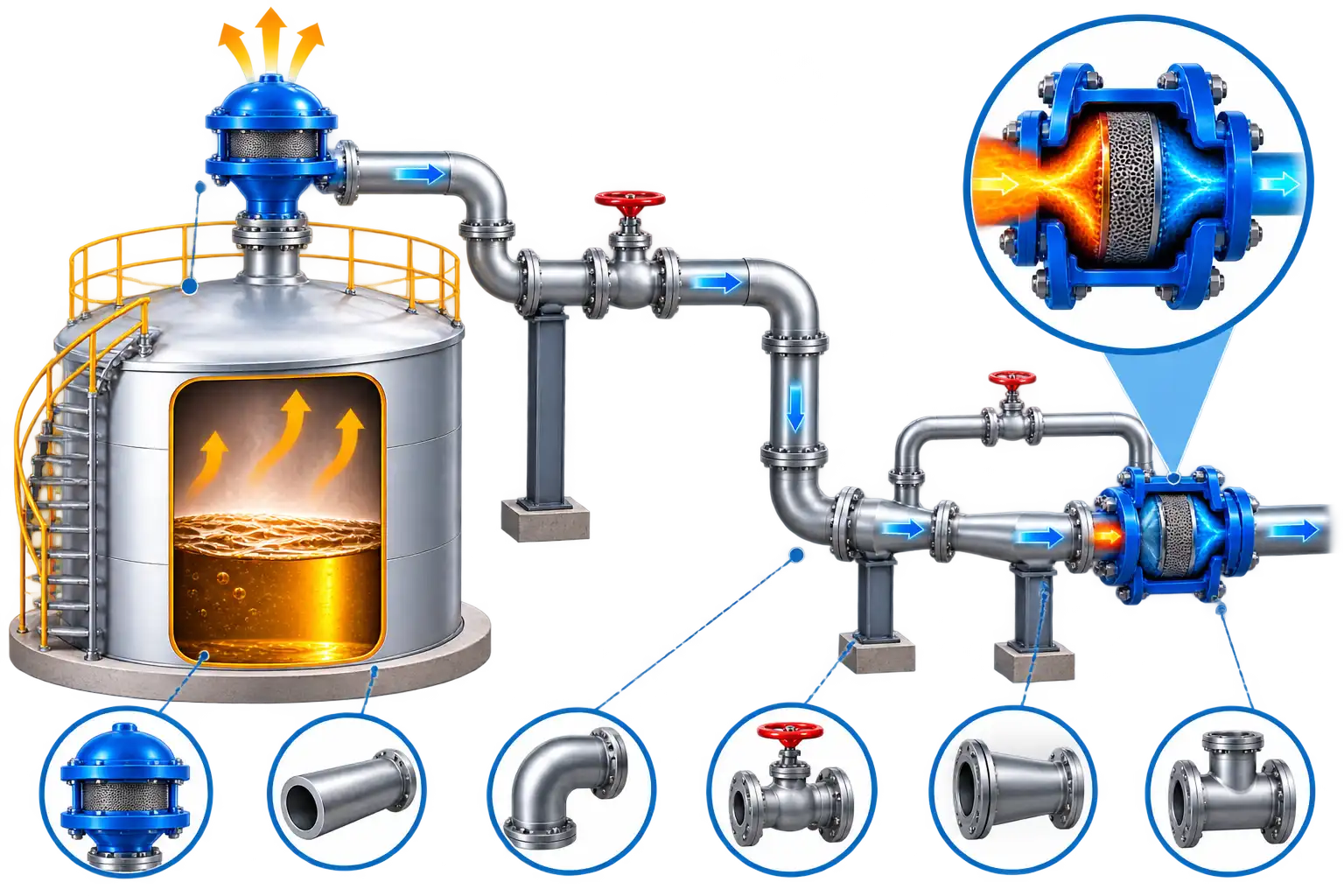
The piping layout around the arrester can significantly influence performance.
Review:
- Pipe length
- Pipe diameter
- Bends
- Elbows
- Valves
- Reducers
- Branch connections
- Distance from ignition source
- Tank nozzle arrangement
- Orientation
- Installation position
A flame arrester installed directly on a tank vent can have different requirements from one installed several metres away through a complex piping system.
API 2000 specifically identifies piping configuration as one of the factors to consider when selecting a flame arrester.
Select the Correct Material
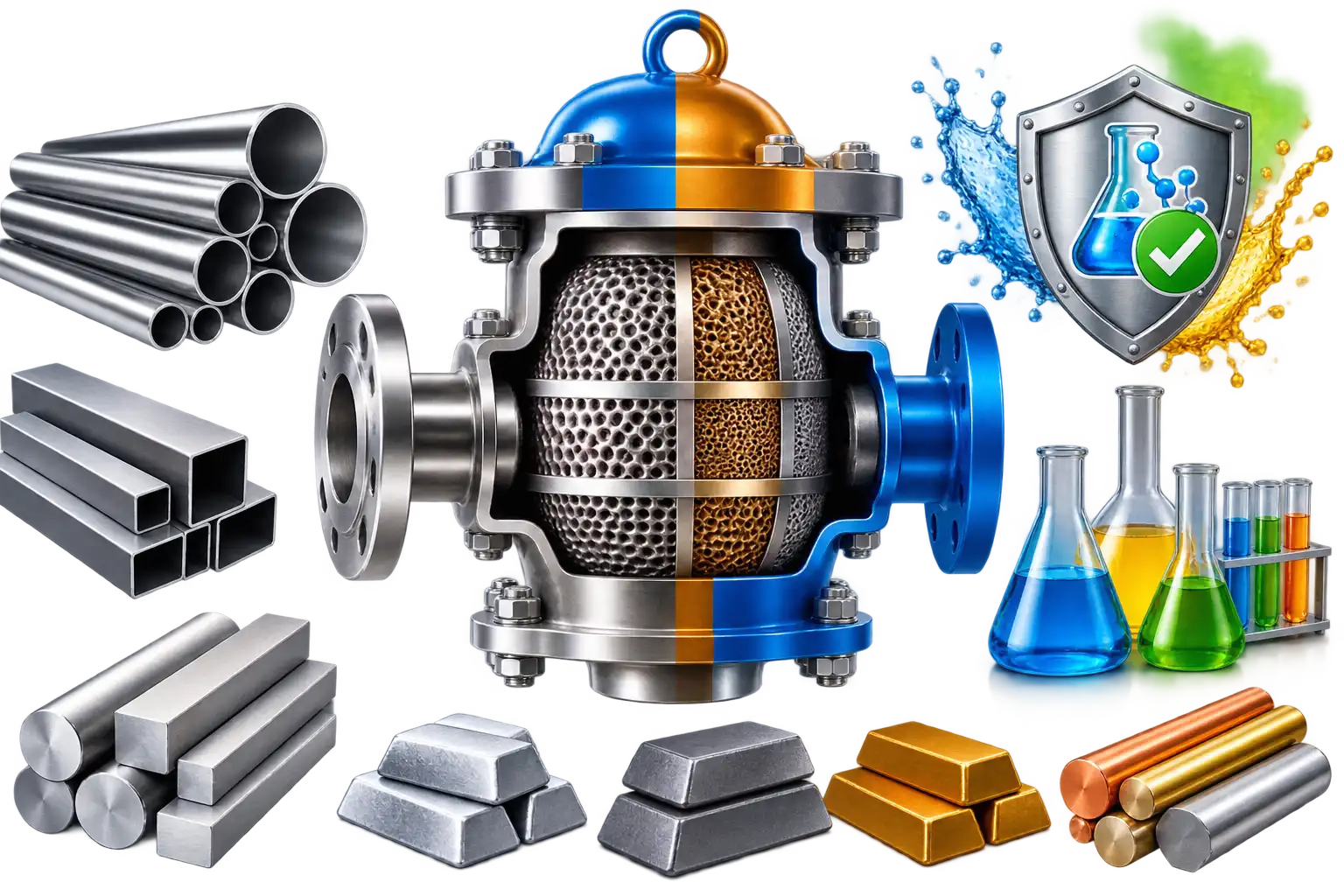
Material selection should consider the stored chemical and environmental conditions.
Common construction materials may include:
- Stainless steel
- Carbon steel
- Aluminium
- Special alloys
- Other materials depending on application
For corrosive chemicals, material compatibility becomes particularly important.
Consider:
Chemical compatibility + temperature + pressure + corrosion environment + maintenance requirements
For example, a material that works well in hydrocarbon service may not necessarily be the best choice for aggressive chemical vapours.
Check Pressure Drop
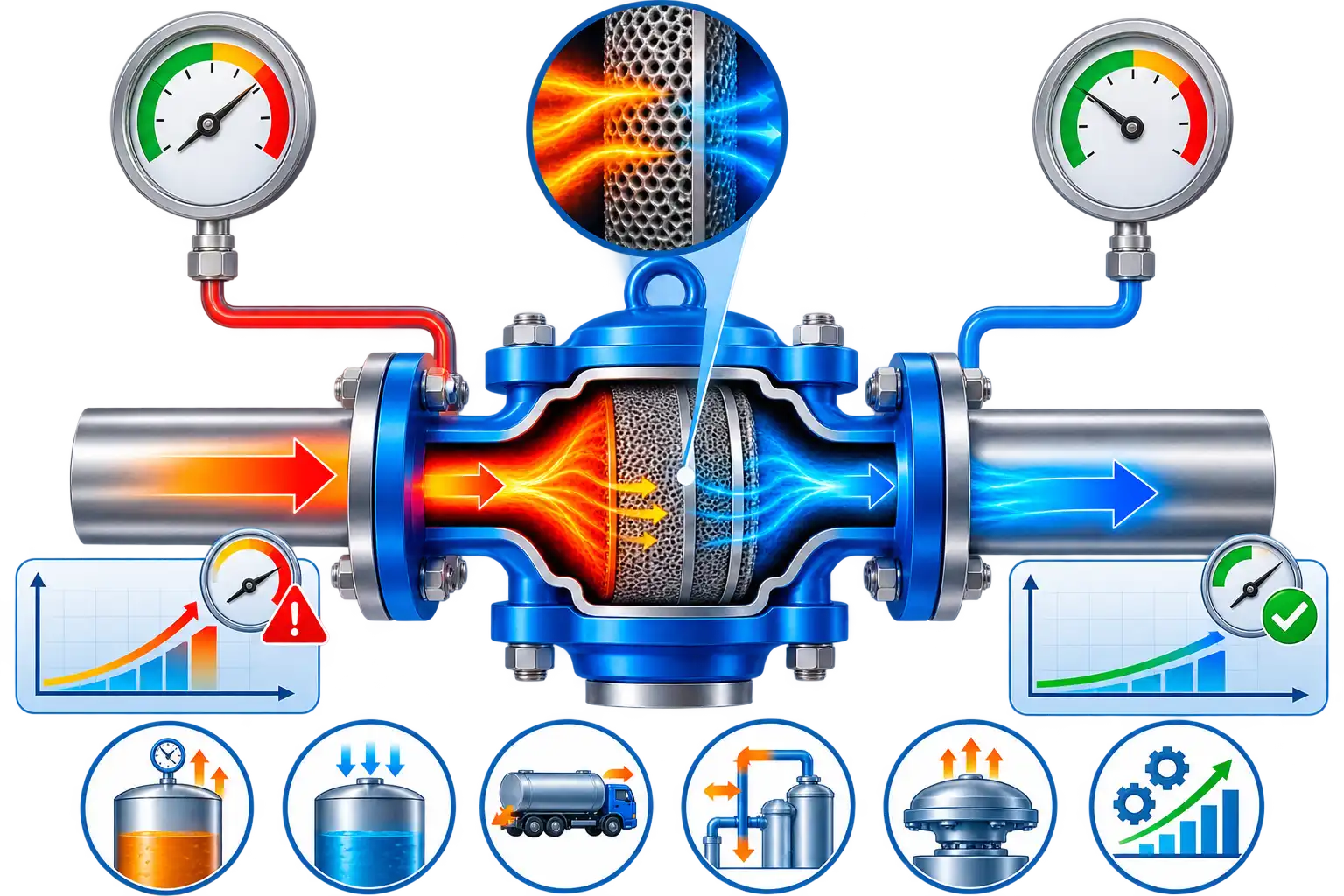
Pressure drop is one of the most commonly overlooked parameters.
A flame arrester contains a flame-arresting element with small passages. These passages provide the mechanism for flame quenching but also create resistance to flow.
Excessive pressure drop can affect:
- Tank pressure
- Tank vacuum
- Product transfer rate
- Vapour recovery
- Breather valve performance
- Process stability
Therefore, the selection should consider both:
Flame protection + required venting capacity
—not flame protection alone.
Consider Fouling and Maintenance
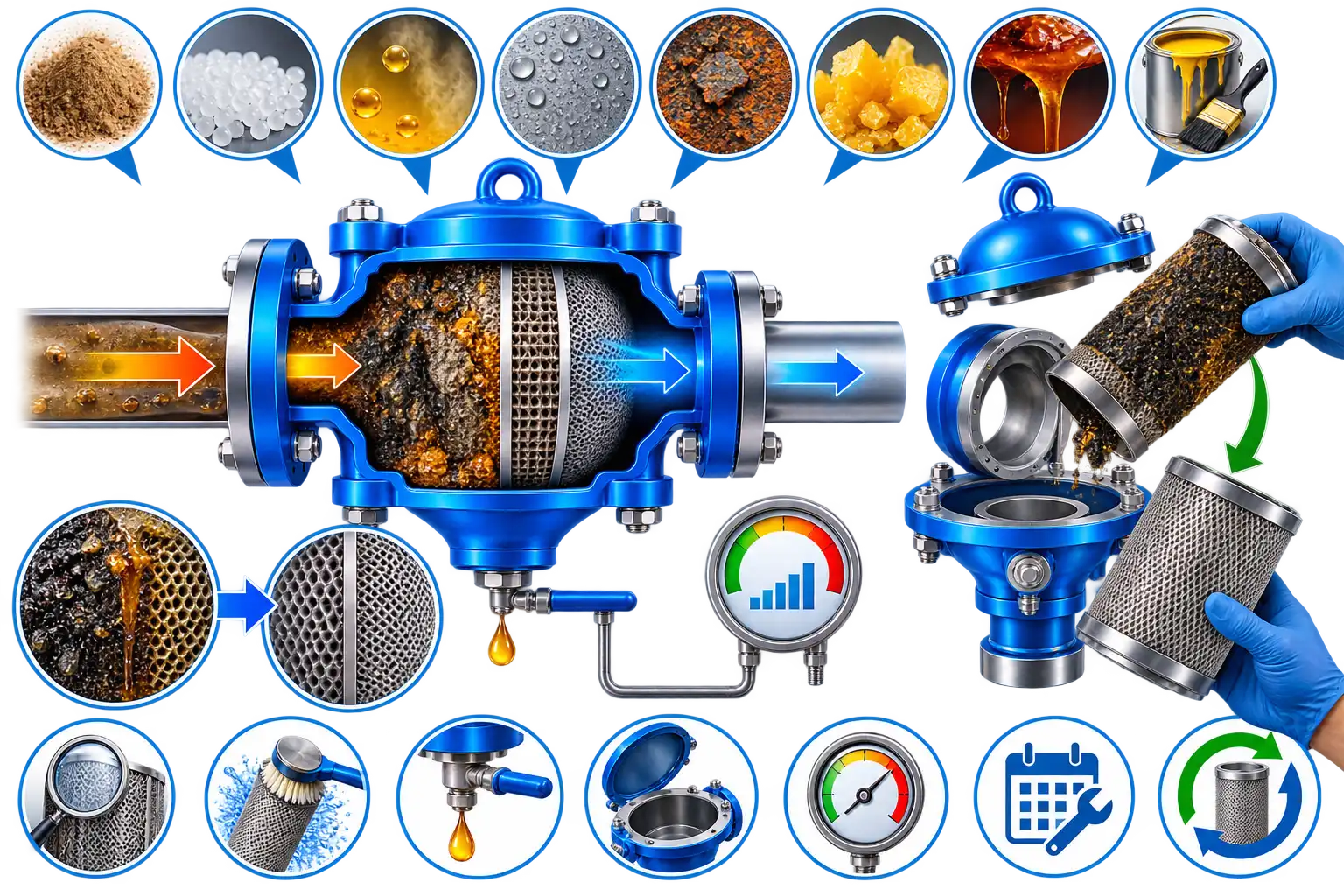
Storage tank applications can expose flame arresters to:
- Dust
- Polymer deposits
- Product vapours
- Condensation
- Corrosion products
- Wax
- Sticky chemicals
- Paint or coating residues
These materials can accumulate on the flame-arresting element.
A partially blocked arrester can increase pressure drop and potentially interfere with tank breathing.
API 2000 highlights the risk of pressure/vacuum problems if a flame arrester in a relief path becomes plugged and is not properly maintained.
Therefore, consider:
- Easy inspection
- Element cleaning
- Drainage
- Accessibility
- Differential-pressure monitoring where appropriate
- Maintenance frequency
- Replacement requirements
Check the Applicable Standards

For Indian projects, standards and statutory requirements should be evaluated according to the specific application and facility.
Relevant references may include:
ISO 16852
Venting Atmospheric and Low-Pressure Storage Tanks
It is particularly relevant when designing and reviewing tank venting systems.
OISD Standards
For Indian petroleum and hydrocarbon facilities, applicable OISD documents should be reviewed alongside the project requirements. OISD currently lists OISD-STD-108 – Oil Storage and Handling and OISD-STD-106 – Pressure Relief & Disposal System, among other relevant standards.
PESO Requirements
Where the installation falls under the jurisdiction of India's Petroleum & Explosives Safety Organisation (PESO), applicable statutory requirements, approved drawings and safety provisions should be considered.
PESO administers the regulatory framework applicable to petroleum and explosive safety in India, and its requirements should be checked for the specific installation rather than assuming that one approval requirement applies to every flame-arrester application.
Common Applications in India
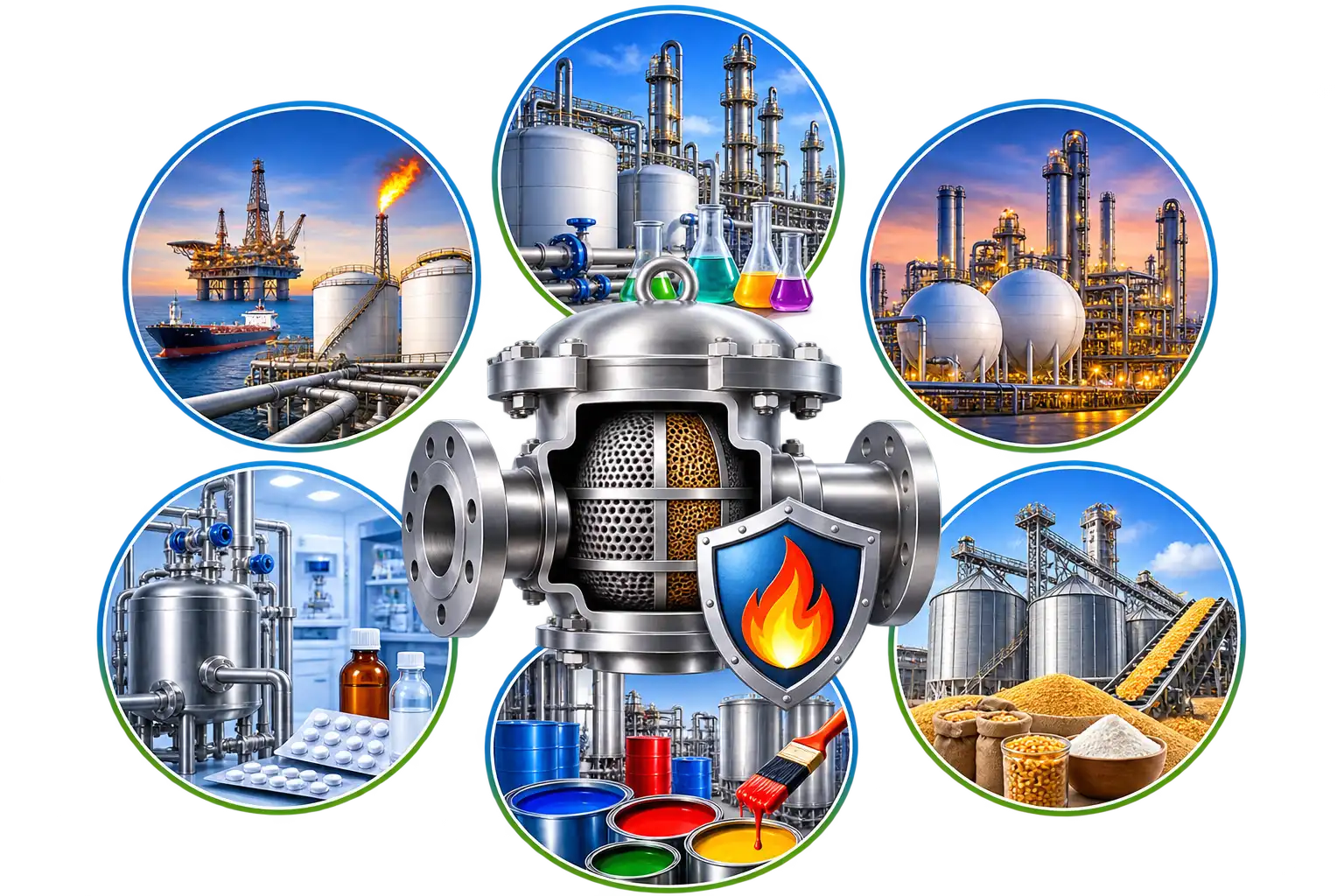
Flame arresters are relevant across several Indian industries.
Oil & Gas
- Crude oil storage
- Product storage
- Hydrocarbon tanks
- Loading/unloading systems
- Vapour recovery
Chemical Industry
- Solvent storage
- Flammable chemical tanks
- Process vessels
- Reactor systems
- Vapour lines
Petrochemical Industry
- Hydrocarbon storage
- Intermediate tanks
- Process units
- Vapour handling systems
Pharmaceutical Industry
- Solvent storage
- Alcohol storage
- Flammable process applications
- API manufacturing facilities
Paint & Coatings
- Solvent tanks
- Mixing systems
- Resin storage
- Flammable liquid handling
Food & Grain Processing
Where combustible dust or vapour hazards exist, appropriate explosion-protection engineering should be considered; flame arresters are not a universal substitute for dust-explosion protection systems.
7 Common Flame Arrester Selection Mistakes
Selecting Only by Pipe Size
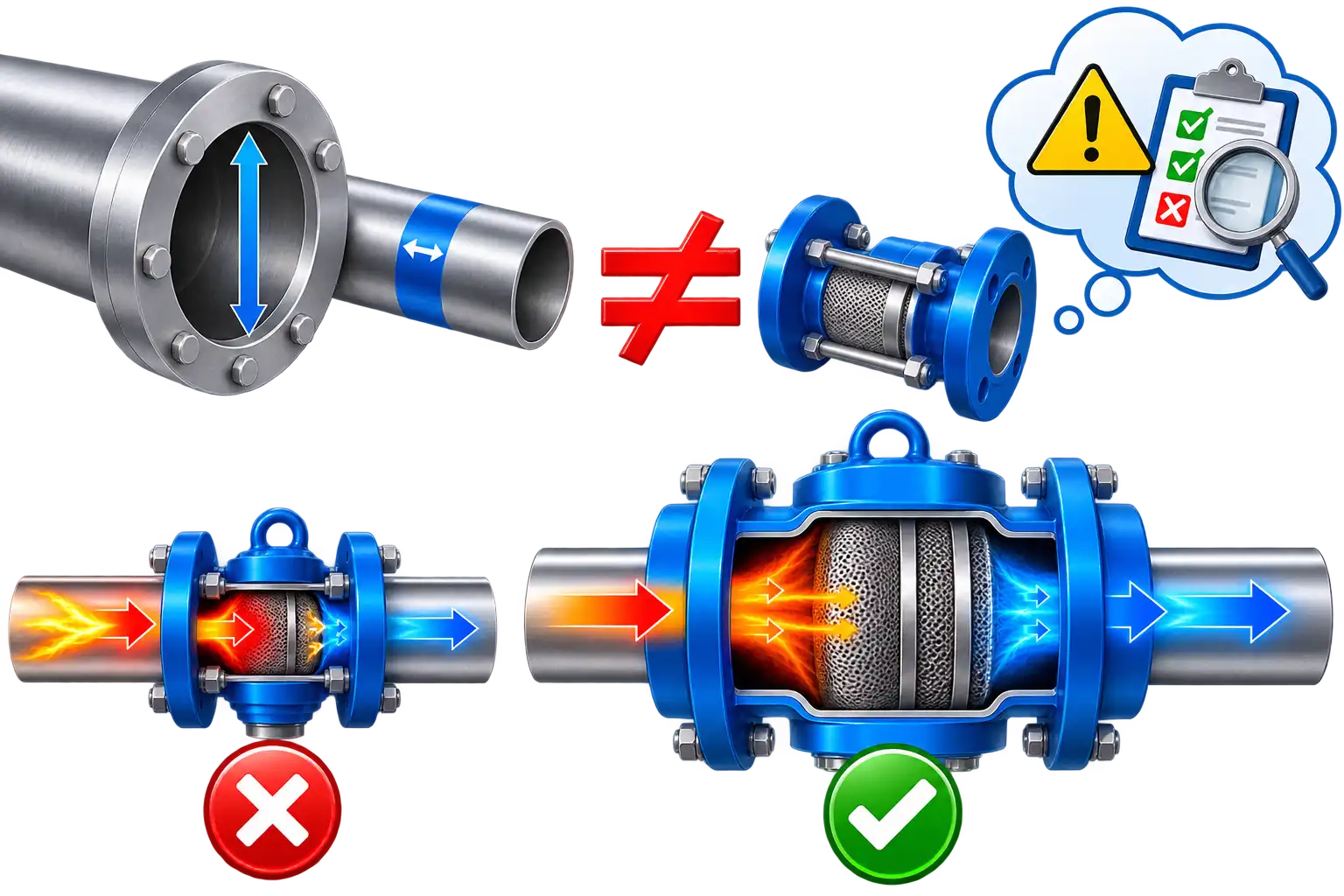
A 4-inch pipe does not automatically mean that any 4-inch flame arrester is suitable.
Ignoring Gas Group

The vapour's explosion characteristics must be considered
Ignoring Pressure Drop
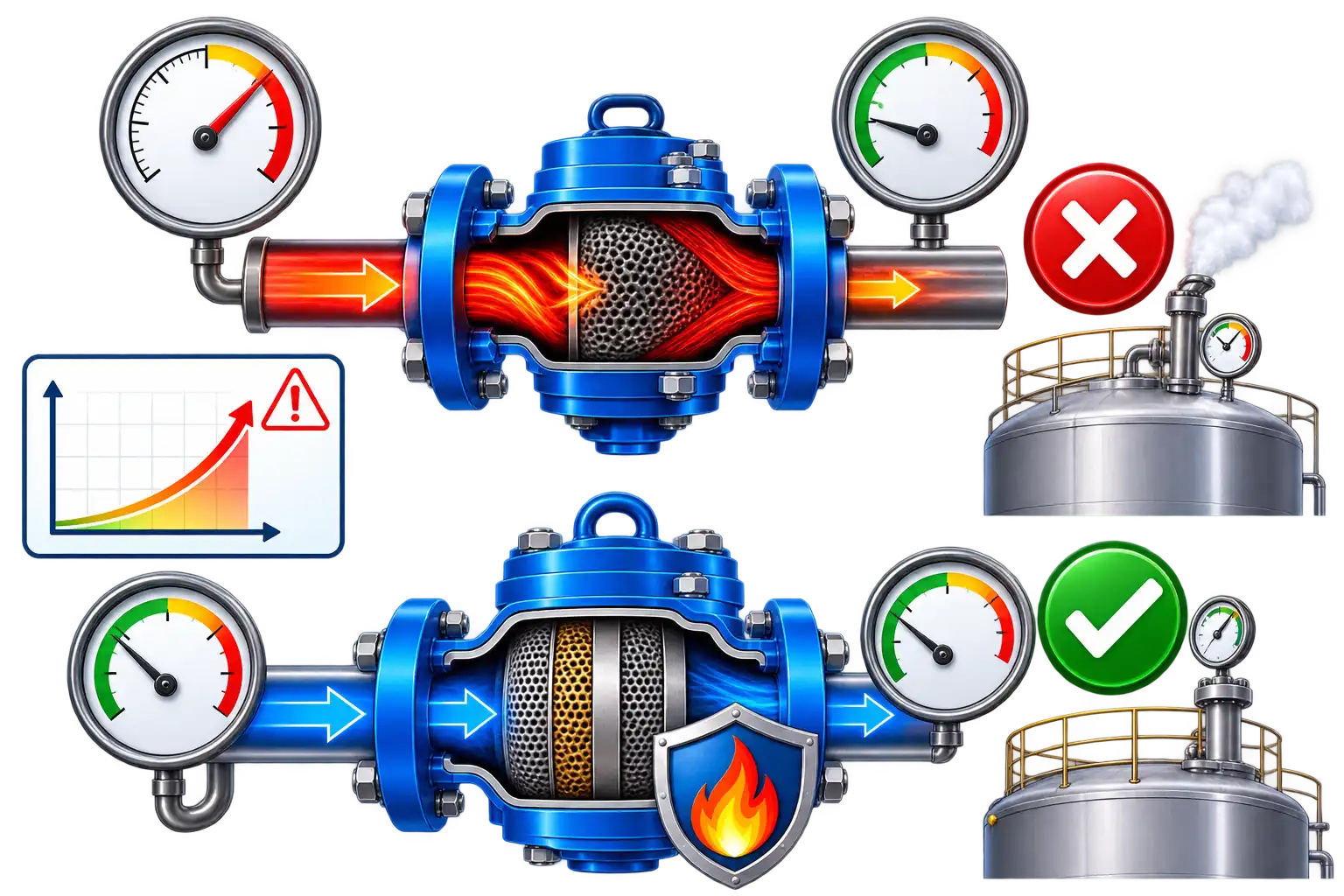
An arrester that provides flame protection but creates unacceptable pressure drop is not a suitable tank-venting solution.
Using the Wrong Arrester Type
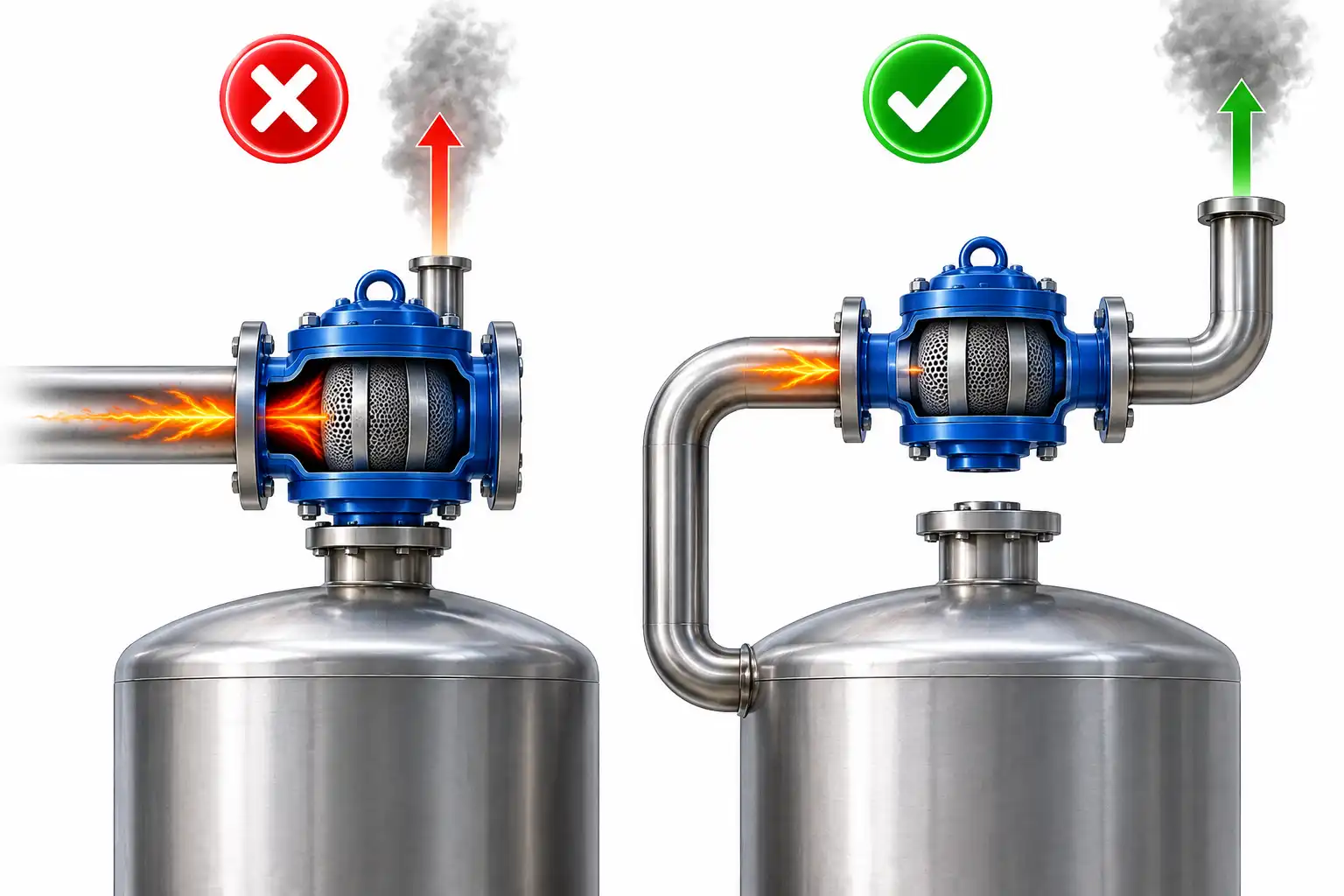
End-of-line and in-line applications are not interchangeable by default.
Ignoring Temperature

Operating temperature can influence the suitability of the arrester and its materials.
Forgetting Maintenance
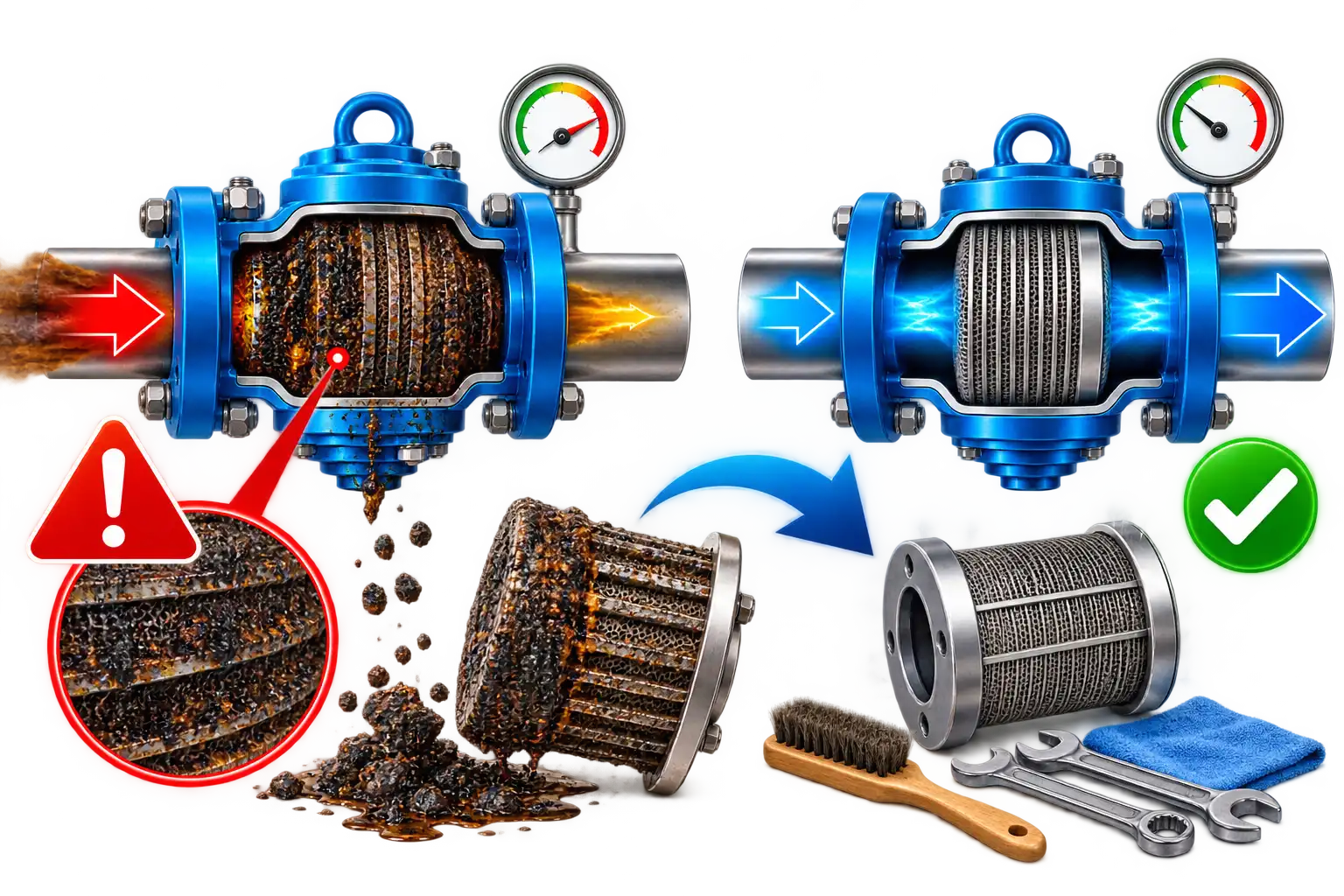
A dirty or blocked flame-arresting element can affect the venting system.
Treating a Flame Arrester as a Complete Tank Protection System
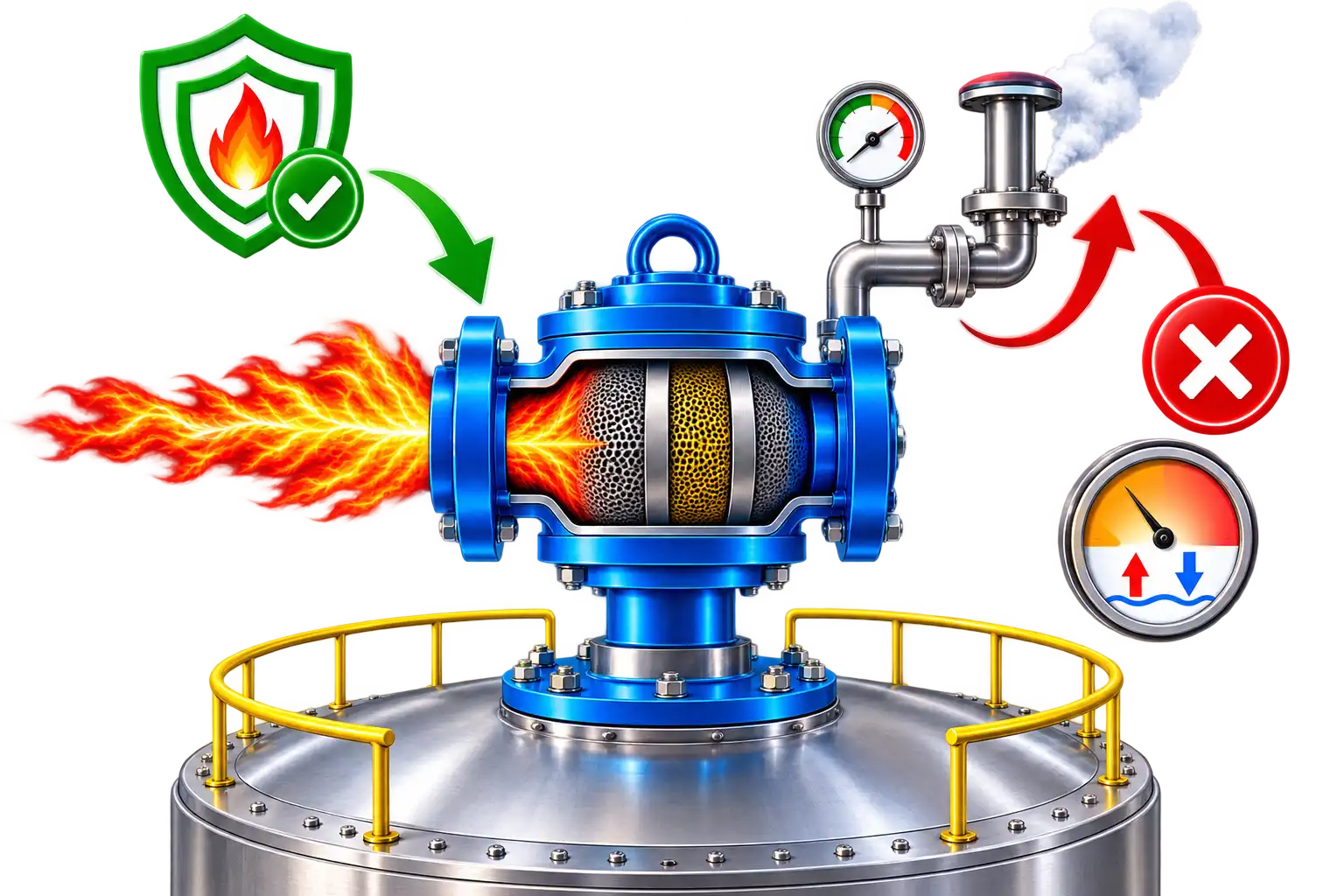
A flame arrester addresses flame transmission. It does not automatically provide the tank's required pressure/vacuum or emergency venting capacity.
Flame Arrester Selection Checklist
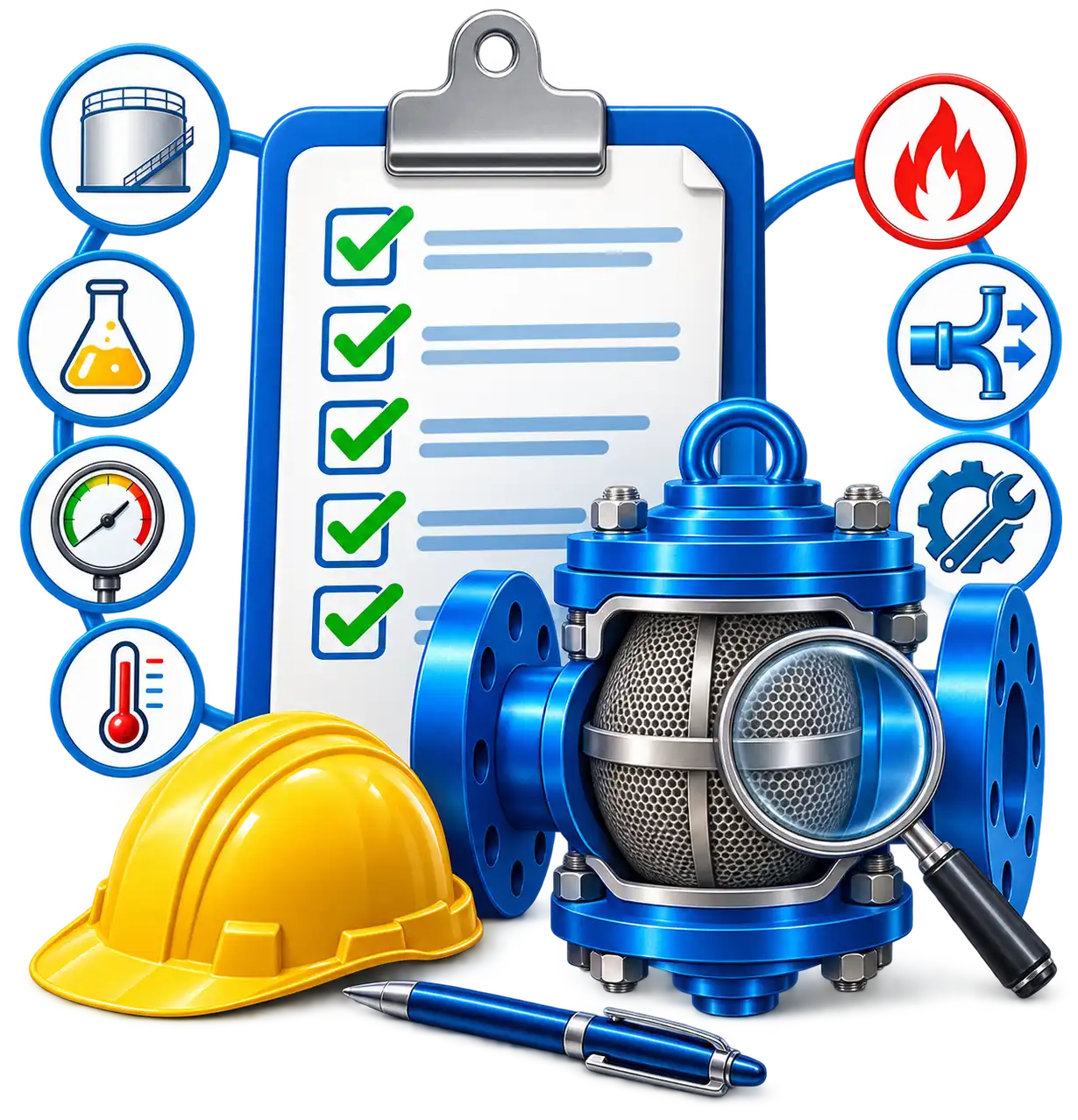
Before requesting a flame arrester quotation, prepare the following information:
| Parameter | Information Required |
|---|---|
| Application | Storage tank / process / vapour line |
| Product | Chemical / hydrocarbon / solvent |
| Vapour composition | Gas/vapour analysis |
| Explosion group | IIA / IIB / IIC, as applicable |
| Tank size | Diameter & capacity |
| Connection size | DN / NB |
| Flow rate | Normal & maximum |
| Operating pressure | Minimum / normal / maximum |
| Operating temperature | Minimum / normal / maximum |
| Installation | End-of-line / in-line |
| Piping | Length, bends and configuration |
| Material | Required construction/material compatibility |
| Flame scenario | Deflagration / detonation, as applicable |
| Venting system | Open vent / PVRV / vapour recovery |
| Standards | Project/client/regulatory requirements |
| Location | Indoor / outdoor / hazardous area |
| Maintenance | Inspection & cleaning requirements |
How Ventil Can Help
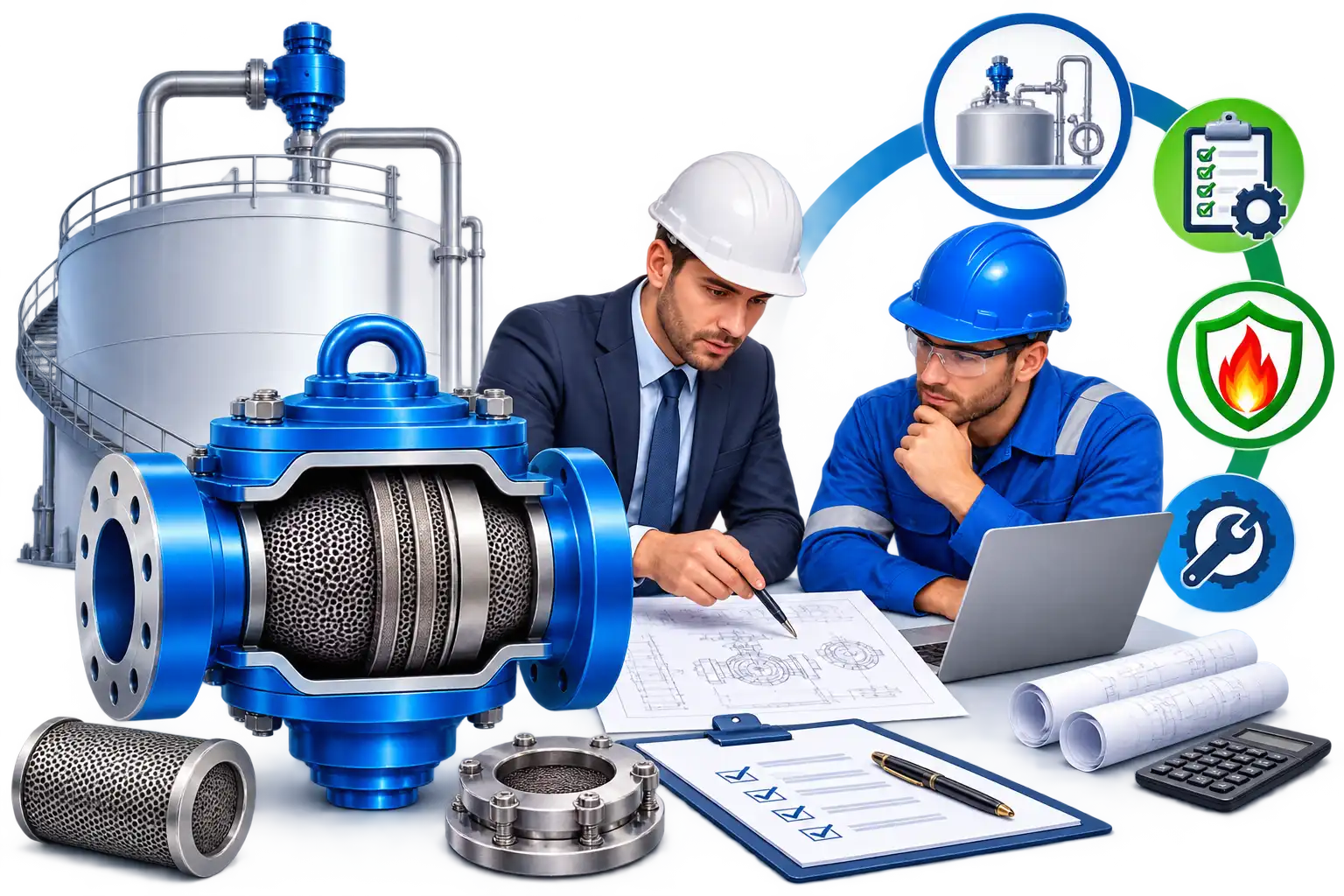
Selecting a flame arrester should be an engineering decision—not simply a catalogue selection.
At Ventil Components Pvt. Ltd., flame-arrester selection can be evaluated according to the application's process conditions, installation configuration and required protection objectives.
Whether your requirement is for an end-of-line flame arrester or an in-line flame arrester, the engineering review should consider the complete system rather than looking at the device in isolation.
Share your application details with the Ventil engineering team:
- Tank capacity
- Product name
- Vapour composition
- Operating temperature
- Operating pressure
- Flow rate
- Tank nozzle/vent size
- P&ID
- Installation arrangement
The engineering team can then evaluate the application and recommend an appropriate flame-arrester configuration.
Protect your storage tanks. Prevent flame propagation. Engineer the right protection.
Frequently Asked Questions
A flame arrester is used to reduce the risk of flame propagation between the tank and an external or connected ignition source through a vent or piping system.
No. A breather valve manages tank pressure and vacuum during normal operation, while a flame arrester is intended to prevent flame transmission.
Depending on the application, it may be installed at the tank vent outlet as an end-of-line flame arrester or within connected piping as an in-line flame arrester.
Selection should consider the product/vapour, gas group, flow rate, pressure, temperature, piping configuration, installation type, materials, pressure drop and applicable standards.
ISO 16852 is a key international standard covering flame-arrester performance requirements, testing and limits of use. (ISO)
Generally, no. These devices perform different functions. The complete tank venting and protection system should be engineered for the application's requirements.