

A Breather Valve (also called a Pressure Vacuum Breather Valve) is an essential safety device for storage tanks, water tanks, and process vessels. It protects tanks from over-pressure and vacuum conditions while minimizing product loss and emissions. Choosing the right tank breather valve ensures safe operations, compliance with global standards, and long-term reliability.
What is a Breather Valve?
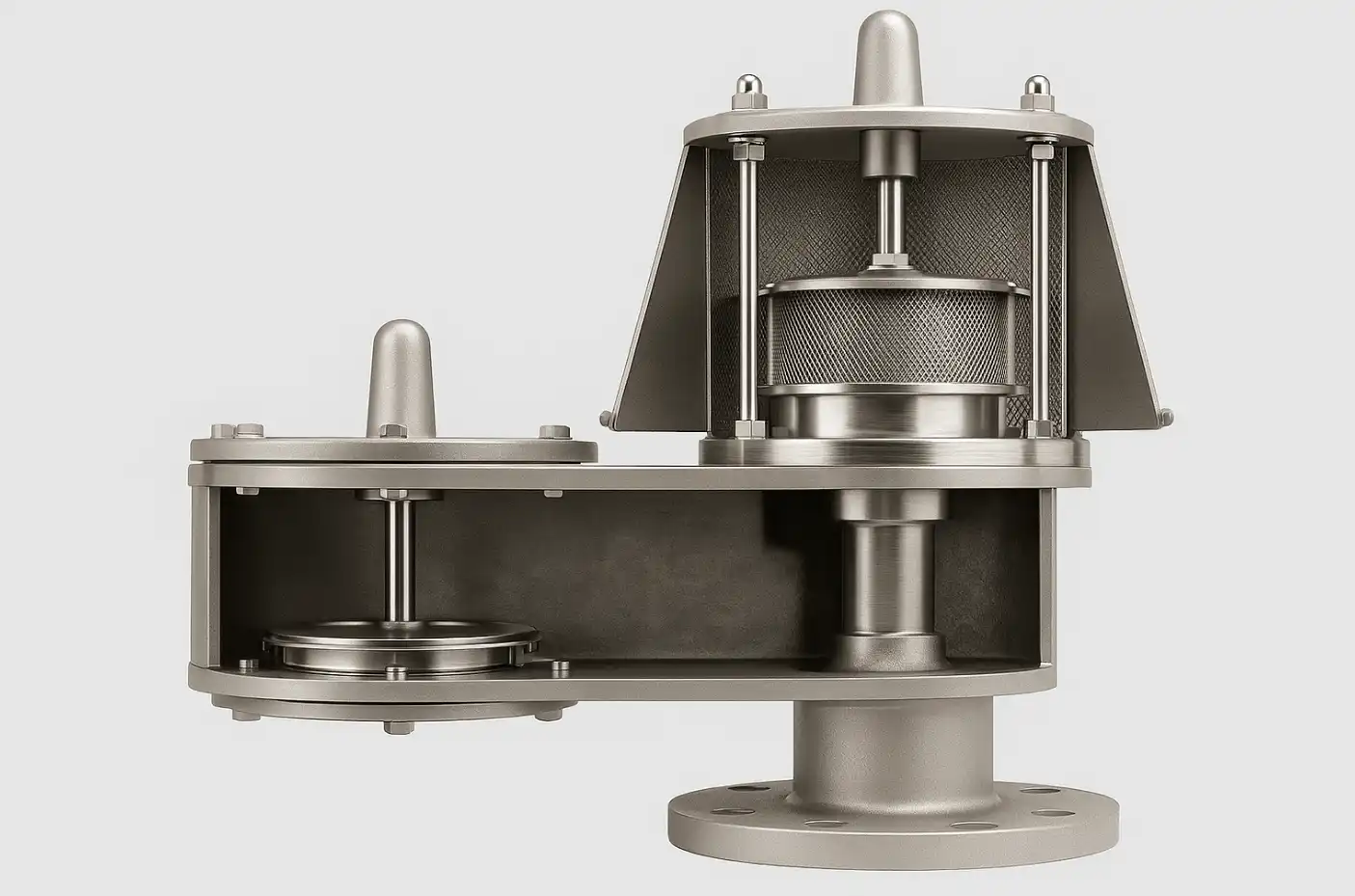
A Breathing Valve for Tanks regulates internal pressure by allowing controlled venting. During filling, it prevents over-pressure, and during emptying, it prevents a dangerous vacuum.
Common names include:
- Water Tank Breather Valve
- Air Breather Valve
- Vacuum Breather Valve
- Storage Tank Breather Valve
- Compressor Breather Valve
Some designs are combined with Flame Arrester Breather Valves to provide added protection against fire hazards.
Why Proper Breather Valve Selection Matters
Choosing the wrong valve can lead to:
- Tank damage due to excessive internal pressure or vacuum
- Product loss through uncontrolled vapor release
- Failure in meeting API, ASME, and ISO compliance
- Higher maintenance costs and safety risks
The right Breather Valve selection ensures:
- Tank protection from pressure fluctuations
- Reduced VOC emissions (helping meet environmental standards)
- Energy efficiency by preventing unnecessary vapor loss
- Long-term operational safety
Factors to Consider When Selecting a Breather Valve :
1. Tank Size & Capacity
The larger the tank, the higher the breathing requirements. A correctly sized Breather Valve ensures smooth venting without compromising tank safety.
2. Set Pressure & Vacuum Settings
Breather Valves are typically designed with specific opening pressure and vacuum relief values. The selection must align with your process requirements and international standards.
3. Type of Breather Valve
Different breather valve types are used based on application:
- Pressure-Only Breather Valve : Prevents excess tank pressure.
- Vacuum-Only Breather Valve : Prevents vacuum collapse during product withdrawal.
- Pressure-Vacuum Breather Valve : Combines both functions, ideal for storage tank breather valves.
- Flame Arrester Breather Valve : Prevents flame transmission into the tank, common in petrochemical plants.
- Compressor Breather Valve : Protects compressors from air pressure fluctuations.
4. Material of Construction
Depending on the stored product, the valve body and trim materials must be corrosion-resistant (e.g., Stainless Steel, Aluminum, or Carbon Steel).
4. Flow Capacity
Select a valve with a certified flow capacity that matches tank filling and emptying rates, ensuring safe venting.
5. Industry Standards & Certifications
Look for valves manufactured and tested to API 2000, ASME, or ISO standards for guaranteed reliability.
6. Maintenance & Accessibility
Choose a design that allows easy inspection, cleaning, and calibration to ensure long-term performance.
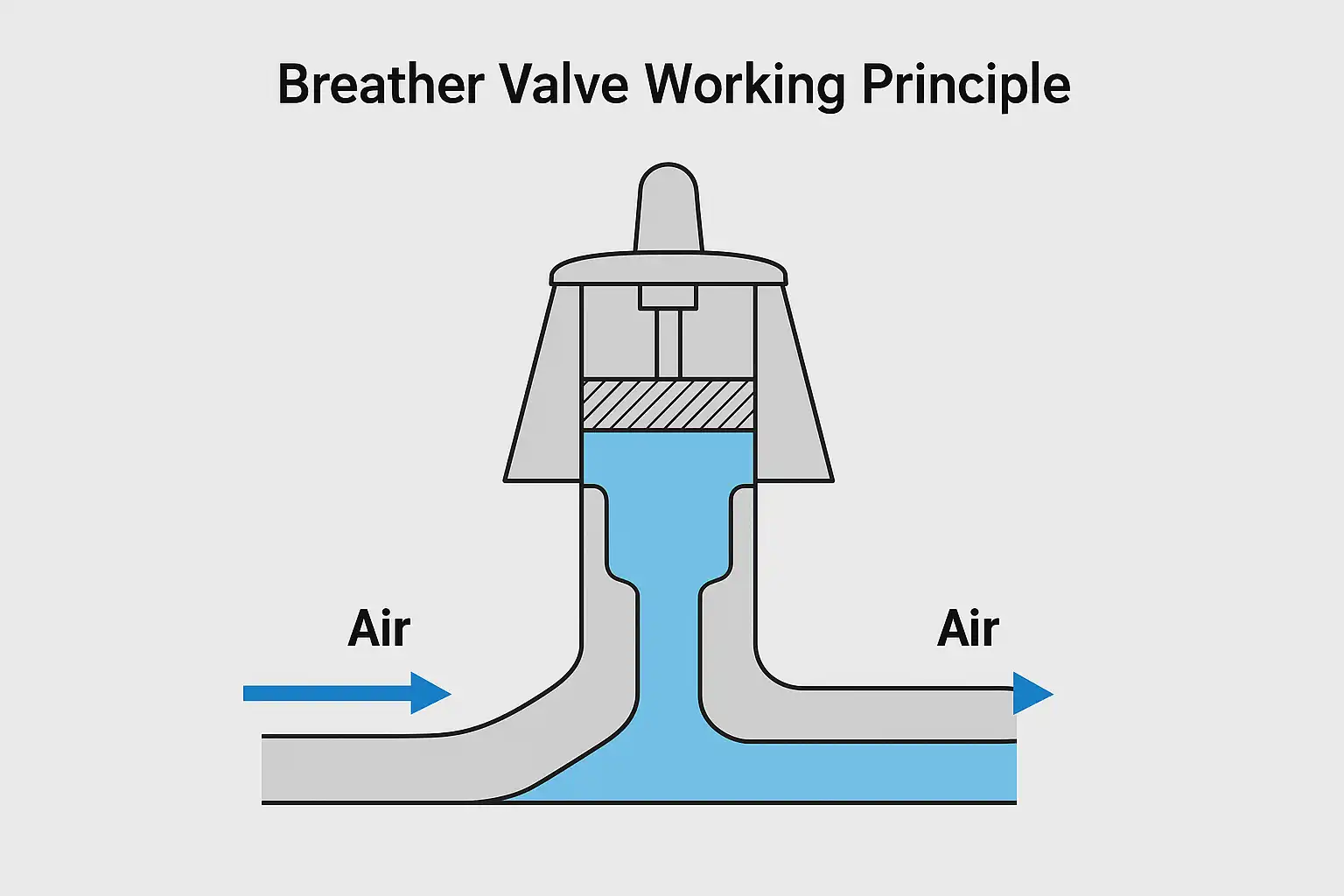
Breather Valve Working Principle :
The breather valve working mechanism is simple yet vital:
- Pressure Relief Mode : Opens when internal pressure exceeds the set limit, releasing excess vapors safely.
- Vacuum Relief Mode: Opens when vacuum forms inside the tank, allowing air in to balance the pressure.
This dual action safeguards tanks from rupture, collapse, and product evaporation.
Best Practices for Breather Valve Selection :
- Conduct a tank venting analysis to determine correct valve size.
- Verify that the flow curves match your process conditions.
- Always cross-check manufacturer data sheets for set pressure accuracy.
- Consider advanced designs like Pilot-Operated Breather Valves for high-precision control.
Applications of Breather Valves :
Breather valves are widely used in:
- Petroleum & chemical storage tanks
- Water tanks and wastewater plants
- Food & pharmaceutical industries
- Air compressor systems
Conclusion
Selecting the right breather valve is crucial for tank safety, product protection, and compliance. Whether you need a water tank breather valve, vacuum breather valve, or pressure vacuum breather valve, consider tank capacity, set pressure, and industry standards before purchasing.
For reliable storage tank breather valves in India, explore Ventil Breather Valve solutions – engineered for durability, accuracy, and compliance with global standards.


